How Should a Proper Fertilization Program Be?
1. Soil Analysis Is the First Step
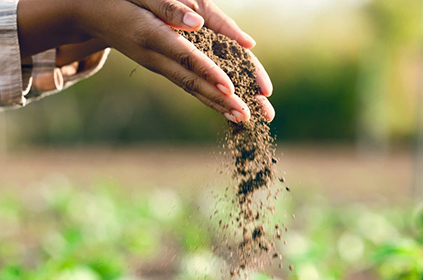
The basis of preparing the right fertilization program is knowing the soil’s organic matter content and nutrient status. Therefore, soil analysis should always be carried out before production begins
Based on the analysis results, fertilization should be planned by taking into account the plant species, climatic conditions and soil structure.
Organic matter binds soil particles together and supports aggregate formation. Thanks to this structure, water and nutrients are retained better in the soil and yield increases. In soils with high organic matter content, root development is stronger and healthier.
2. Excess Fertilizer Reduces Yield
Incorrect or excessive fertilizer applications create imbalances between nutrients and negatively affect plant nutrition.
For example:
• Excessive nitrogen use → nitrate accumulation and increased salinity in the soil
• Excessive phosphorus use → makes iron (Fe) and zinc (Zn) uptake more difficult
Therefore, each application should be made according to analysis results and the plant’s growth stage.
3. Soil pH Should Be Taken into Account
For efficient production, soil pH directly affects the availability of nutrients to the plant. In general, pH values between 6.5 and 7.5 are the most suitable range. When the pH level is too low (acidic) or too high (alkaline), some nutrients become fixed in the soil.
For this reason, fertilizer selection should be made according to the soil pH value.
4. Salinity (EC) Should Be Controlled
Excess salt accumulation in the soil restricts root development and may cause cracking in root tissues. High salinity also makes water uptake by the plant more difficult.
Therefore, the EC value should be measured before fertilization and, if necessary, leaching irrigations should be applied.
5. Lime (CaCO3) Content Should Be Monitored
Lime is a natural soil conditioner. In acidic soils, lime increases pH and positively affects plant development. However, when the lime content is very high, the uptake of elements such as iron, zinc and phosphorus becomes more difficult.
Therefore, balance should be achieved in calcareous soils with products that have a high micro-element content.
Conclusion:
The right fertilization program is based on three factors: soil analysis + plant requirement + environmental conditions. Before each application, soil conditions should be measured and the dose and product selection should be determined accordingly. This approach provides higher yield, sustainable soil health and more profitable production.