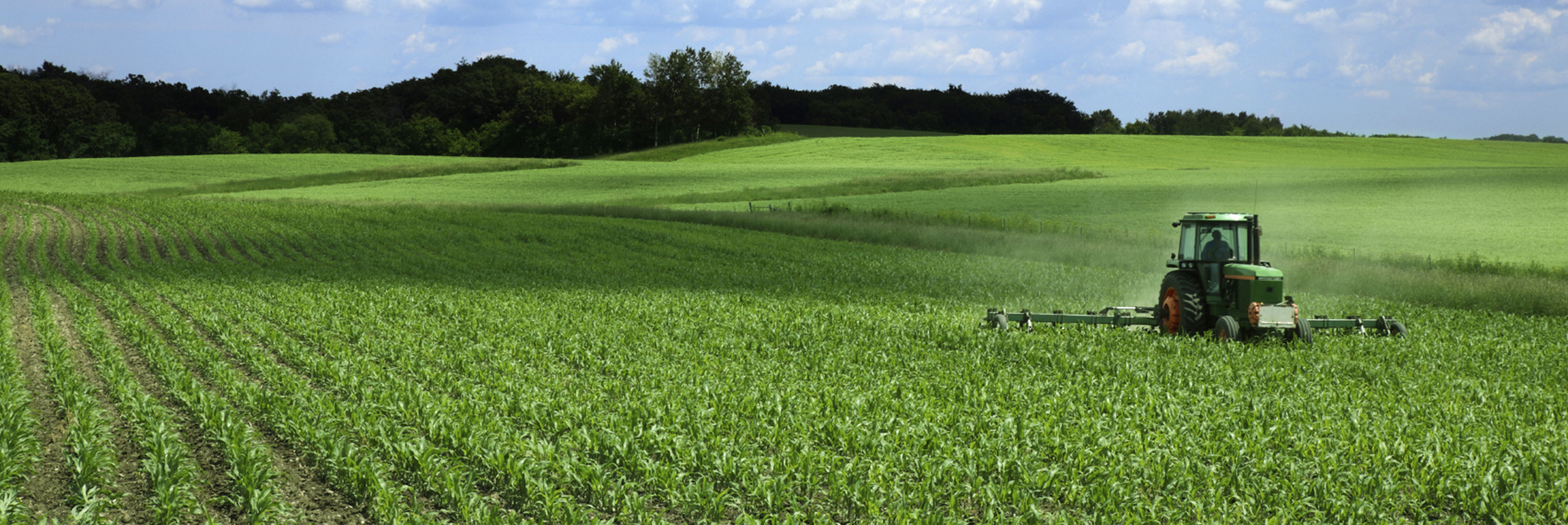

Humic and fulvic acids are natural soil conditioners that help make nutrients held in the soil more available, support root development, and facilitate plant nutrient uptake. By improving soil structure and water-holding capacity, these two organic acids contribute to the foundations of sustainable, productive agriculture.
There is a familiar cycle in conventional agriculture: bag after bag of fertilizer is applied every year. Costs rise with nitrogen, phosphorus, and potassium applications, yet yield or product quality at harvest may still fall short of expectations. Leaves turn yellow, plants fail to grow, and fruit drops. The grower’s first thought is often, “Did I apply too little fertilizer?”—and even more chemical fertilizer is added to the soil.
However, applying fertilizer alone is not enough; the nutrients it contains must also remain in forms that plants can absorb. Depending on soil characteristics such as pH, lime, and clay content, some nutrients may be transformed into forms that are harder for plants to use or may be retained in the soil. Humic and fulvic acids can help make these elements more readily available to plants while also supporting the soil’s physical and chemical properties.
How Are Humic and Fulvic Acids Formed?
To understand these two substances, we first need to look at the “living” part of soil. No one fertilizes forests, grasslands, or untouched natural areas, yet trees and plants still grow vigorously. This is because fallen leaves, twigs, and other organic residues decompose over the years and become incorporated into the soil.
This process of decomposition and transformation is called humification. Through the activity of soil organisms, organic residues are gradually broken down and transformed into more stable organic structures. Under natural conditions, this process may continue for many years and contributes to the formation of humus and humic substances. Humic and fulvic acids are among the most valuable and biologically active fractions of humus.
- Humic Acid: An organic compound formed through the natural transformation of organic matter that supports the physical and chemical properties of soil. Under suitable conditions, it may help make some nutrients more readily available to plants.
- Fulvic Acid: The small-molecule, active fraction of humus that can pass through cell membranes relatively easily. It can bind and chelate trace elements such as iron and zinc and act as a biological nutrient carrier into plant tissues and cells.
Are Humic and Fulvic Acids Fertilizers?
This is one of the most common misconceptions. Humic and fulvic acids are not chemical fertilizers such as NPK products by themselves. They do not contain high concentrations of nitrogen, phosphorus, or potassium and therefore do not directly “feed” the plant in the same way.
To use an analogy, mineral fertilizers are the food on the table, while humic and fulvic acids are like the digestive system that helps the body process and use that food. Supplying more food does not solve the problem if the system that uses it is not functioning effectively.
What Are the Differences Between Humic Acid and Fulvic Acid?
Humic and fulvic acids are often listed together on product labels as “Humic + Fulvic Acid.” Both groups of compounds are components of humic substances, and some of their functions overlap. Nevertheless, they may differ in molecular structure, solubility, and behavior in soil or around the plant.
Humic acid is more commonly associated with supporting soil properties, whereas fulvic acid may stand out in its interactions with nutrients because of its smaller molecular structure and solubility across different pH conditions. This distinction does not mean that the functions of the two compounds are separated by rigid boundaries.
Humic Acid: The Soil Structure Specialist
Humic acid has a relatively high molecular weight. Because of its large structure, it does not easily enter plant tissues. Its primary area of activity is the soil rather than the inside of the plant. In the soil, humic acid can help loosen compact clay soils, improve the cohesion of sandy soils, retain water, and increase the soil’s nutrient-holding capacity. It may also remain in the soil for a relatively long time.
Fulvic Acid: The Fast and Versatile Carrier
Fulvic acid has a smaller and more mobile molecular structure. It may pass more readily through leaf stomata or root cell membranes. One of its most notable properties is chelation, or nutrient transport. It can bind minerals such as iron, zinc, and calcium in the soil or on the leaf surface and help transport them into plant tissues. Its effects may become visible relatively quickly depending on the plant, product, and application conditions.
Feature Humic Acid Fulvic Acid
Molecular Size and Weight Large, high-molecular-weight structures Smaller and more flexible molecular structures
Color Dark brown or black Light yellow, amber, or golden
Solubility Soluble in alkaline water; may precipitate under acidic conditions Soluble across a wide range of acidic and alkaline pH conditions
Persistence in Soil Relatively high; may remain active in soil for longer Relatively low; reacts and is consumed more quickly
Main Area of Activity Soil; supports soil structure and cation exchange capacity Plant tissues and leaves; supports biological transport
Uptake Pathway Acts mainly indirectly through the root environment May pass through leaf stomata and root membranes
Benefits of Humic and Fulvic Acids for Soil and Plants
One of the major challenges in many soils in Türkiye is low organic matter. As organic matter declines, soil may become compacted, lose its ability to retain water and air, and hold applied nutrients in less available forms. Humic and fulvic acid applications can help interrupt this cycle of soil degradation.
Benefits for Soil: Physical, Chemical, and Biological Effects
1. Physical Effects: Supports Soil Structure
- Helps Loosen Heavy Clay Soils: Clay soils may dry, crack, and become very hard. Roots can struggle to move through this compact layer. Humic acid can support aggregation and help create a more porous, aerated, sponge-like soil structure.
- Improves Sandy Soils: Sandy soils do not retain water and nutrients effectively; irrigation water and fertilizer can move below the root zone. Humic substances can help bind particles and improve the soil’s capacity to retain water and nutrients.
- Supports Aeration in the Root Zone: Roots also need oxygen. A more porous soil structure supports root respiration and may reduce problems associated with poorly aerated soil.
- Darkens Soil Color: Humic substances give soil a darker color. Darker soils may absorb solar energy more effectively, which can support earlier soil warming, germination, and seedling establishment in suitable conditions.
2. Chemical Effects: Supports Nutrient Retention and Availability
- Increases Cation Exchange Capacity (CEC): CEC describes the soil’s ability to retain positively charged nutrients and release them when plants need them. Humic substances can help retain nutrients such as potassium, calcium, and magnesium and reduce leaching losses.
- Supports Phosphorus and Micronutrient Availability in Calcareous, High-pH Soils: In high-pH, calcareous soils, phosphorus may react with calcium, while iron and zinc may become less available. Humic and fulvic acids can interact with and chelate these nutrients, helping them remain in more available forms.
- Buffers Soil pH and Salinity: Long-term fertilizer use may contribute to salt accumulation in the root zone. Humic substances can support buffering processes around the roots and moderate sudden changes in the soil environment. They should not, however, be regarded as an instant substitute for proper salinity or pH management.
3. Biological Effects: Supports Soil Life
- A Source of Organic Carbon: Humic and fulvic substances can provide organic carbon that supports beneficial soil microorganisms.
- Supports Beneficial Microbial Activity: By improving the root-zone environment, humic substances may support beneficial bacteria and mycorrhizal fungi and contribute to a more balanced soil ecosystem.
- Supports Natural Soil Restoration: Increased biological activity can contribute to the decomposition and transformation of plant and animal residues and support the natural humification process over time.
Benefits for Plants: Root and Vegetative Development
- Fine Root Formation and Root Branching: Fine young roots are primarily responsible for water and nutrient uptake. Humic and fulvic substances may support root development and increase the effective absorbing surface of the root system.
- Chlorophyll Formation and Photosynthesis: Fulvic-acid-dominant foliar products may support micronutrient transport and chlorophyll formation. Depending on growing conditions, this may contribute to healthier leaf development and photosynthetic activity.
- Support Under Stress Conditions: Heat, temperature fluctuations, drought, frost, and herbicide stress can restrict plant development. Humic and fulvic substances may support enzyme activity and physiological processes that help plants cope with stress, although they do not eliminate the underlying stress factor.
Choosing Humic Acid Based on Soil Analysis: The Relationship Between pH and Organic Matter
Applying humic or fulvic acid without understanding the soil is like using medicine without a diagnosis. The most appropriate application strategy should be shaped by the data in a laboratory soil analysis report.
1. Determining Dosage According to Organic Matter Content
An organic matter content of at least 3% is often considered desirable for productive agricultural soil. However, many soils in Türkiye have considerably lower levels.
- Organic Matter Below 1% — Very Low-Organic-Matter Soils: At the beginning of the season, a high-humic granulated product or a solid organomineral base fertilizer may be used to support the soil. Subsequent drip irrigation applications may be made at the upper end of the label range, subject to product instructions and technical advice.
- Organic Matter Between 1% and 3% — Moderate-Level Soils: Standard label rates may be sufficient to support soil structure and nutrient-use efficiency.
- Organic Matter Above 3% — Organic-Matter-Rich Soils: Instead of focusing only on basal applications, fulvic-acid-dominant applications aimed at chelation and nutrient transport may be considered during the growing period.
2. Choosing a Product According to Soil pH
- High-pH, Calcareous Soils (pH Above 7.8): Phosphorus, iron, and zinc availability may be restricted. Products with strong chelating capacity and high solubility, including suitable fulvic acid and liquid humic formulations, may be considered.
- Acidic Soils (pH Below 6.0): Humic acid may tend to precipitate under acidic conditions. Neutralized or specially formulated products with improved solubility, or fulvic-acid-based forms, may therefore be more suitable.
3. Choosing According to Soil Texture
- Clay and Heavy Soils: When the goal is to support aggregation and improve soil structure, humic-acid-dominant products may be preferred.
- Sandy and Silty Soils: When the goal is to retain nutrients and reduce leaching, humic-fulvic blends with high cation exchange capacity may be considered.
How Are Humic and Fulvic Acids Applied, and How Is the Dosage Determined?
Regardless of product quality, an application made at the wrong time, with the wrong method, or at an unsuitable rate may not provide the expected result. Matching the correct formulation with the appropriate application method is therefore essential.
The following guide outlines the three most common application methods and general dosage strategies used in the field.
Basal Application Before Sowing or Planting
Early-Season Soil Preparation: Basal application is the main soil application carried out before sowing seeds or transplanting seedlings to prepare the root zone for the season.
- Which Form Should Be Used? Granulated or solid humic acid, or solid organomineral basal fertilizers containing humic and fulvic substances.
- When Should It Be Applied? During soil preparation, immediately before sowing or planting.
- Why Is It Applied? Solid forms dissolve gradually in the soil. They can support early fine-root formation, soil aggregation, and water-holding capacity.
- General Dosage: Depending on the product, 20–50 kg of granulated material per decare, or a solid organomineral fertilizer at the rate specified on its label, may be incorporated into the soil.
Drip Irrigation Application (Fertigation)
Supporting the Root Zone: Fertigation delivers liquid nutrients and soil conditioners directly to the active root zone during the growing period.
- Which Form Should Be Used? Fully water-soluble liquid humic and fulvic acid mixtures.
- When Should It Be Applied? During active growth, generally two or three times at intervals of 15–20 days, depending on the crop and product label.
- Why Is It Applied? It can help retain nutrients supplied through irrigation and support their availability in the root zone.
- General Dosage: Depending on the label, 1–3 liters of liquid product per decare per application may be introduced toward the end of the irrigation cycle.
- Important Warning: The tank mixture must be smooth and homogeneous. Products that are not fully soluble may clog drip emitters.
Foliar Application with a Sprayer
Rapid Nutrient Transport and Stress Support: Foliar application is used to deliver suitable substances through leaf stomata during periods of rapid growth or stress.
- Which Form Should Be Used? Well-filtered, clear liquid formulations with a high fulvic acid content.
- When Should It Be Applied? During rapid growth, before flowering, together with compatible foliar nutrients, or under stress conditions such as frost, extreme heat, or drought.
- Why Is It Applied? The smaller molecular structure of fulvic acid may help transport trace elements such as iron, zinc, and boron into plant tissues.
- General Dosage: Depending on the product label, 150–250 ml of a fulvic-acid-dominant liquid product may be added to 100 liters of water and applied as a fine spray.
- Important Warning: Unrefined, dark, high-molecular-weight humic acid products should not be used for foliar spraying. Poorly filtered materials may leave residues and clog sprayer equipment or leaf surfaces. Always verify tank compatibility with a small jar test before mixing products.
Storage Conditions and Shelf Life of Humic and Fulvic Acid Products
- Sunlight and Temperature: Liquid products should be stored away from direct sunlight, generally in a cool environment between 5°C and 35°C. Excessive heat may cause pressure buildup in the container, while freezing conditions may cause crystallization.
- Keep the Container Closed: Leaving liquid products open may cause surface film formation or fermentation. Close the cap securely after use.
- Shelf Life: Shelf life depends on formulation, stability, packaging, and storage conditions. Although some products may state a shelf life of two to three years under suitable conditions, the product label and technical documents must always take precedence.
Common Misconceptions About Humic and Fulvic Acids
Misconception 1: “The Blacker and More Tar-Like the Liquid, the Better the Humic Acid”
The Facts: A tar-black appearance does not prove that a product contains high-quality humic acid. An extremely dark appearance may sometimes result from wood ash, mineral dust, or undissolved leonardite residues.
Quality should be assessed through analytical values such as active humic and fulvic acid content, organic matter, pH, and water solubility rather than color alone.
Misconception 2: “Raw Leonardite and Processed Humic Acid Have the Same Effect”
The Facts: Leonardite is a naturally mined raw material. Humic acid products are obtained by processing and extracting humic substances from this material into liquid or water-soluble forms.
Raw leonardite generally acts more slowly in the soil, whereas processed humic and fulvic acid products may begin interacting with the soil during the season of application. The actual rate of action depends on the raw material, processing method, soil, climate, and product formulation.
Misconception 3: “Humic Acid Is a Fertilizer and Replaces Nitrogen and Phosphorus”
The Facts: Humic and fulvic acids are not chemical fertilizers and do not directly supply high levels of nitrogen, phosphorus, or potassium.
Humic acid should be regarded as a soil conditioner and a component that can support nutrient-use efficiency. It does not replace a balanced fertilization program prepared according to crop needs and soil analysis.
Misconception 4: “Because It Is Organic, the More I Apply, the Better”
The Facts: Being organic does not mean that unlimited use is appropriate. Excessive application may disturb the balance of the soil solution or cause undesired plant responses.
The most reliable approach is to follow the product label, soil analysis, crop requirements, and technical recommendations.
Misconception 5: “I Can Add Any Humic Acid to the Tank During Foliar Feeding”
The Facts: Many humic acid products are alkaline. When mixed with highly acidic foliar products or certain fertilizers such as calcium nitrate, precipitation may occur.
For foliar use, small-molecule, filtered, fulvic-acid-dominant products are generally preferred. A small-scale compatibility or jar test should always be performed before tank mixing.
Misconception 6: “Humic Acid Instantly Lowers the pH of High-pH Soil”
The Facts: Humic acid is not an acidifying chemical that can reduce soil pH from 8.0 to 6.5 overnight.
Humic and fulvic acids can support the soil’s buffering capacity and interact with nutrients such as iron, zinc, and phosphorus that become less available under high-pH or calcareous conditions. They should not be presented as a substitute for a soil-specific pH management program.
Misconception 7: “A Single Application Will Restore the Soil for the Entire Season”
The Facts: Soil with very low organic matter cannot be completely restored with a single application.
The use of humic and fulvic acids should be considered part of a planned, long-term soil management strategy. Basal, fertigation, or foliar applications may be included at appropriate stages according to the crop, analysis results, and product label.
Frequently Asked Questions
When and How Should Humic and Fulvic Acids Be Applied?
Granulated or solid forms may be used before sowing or planting to support soil structure. Liquid products may be applied through drip irrigation during the growing period, while suitable fulvic-acid-dominant products may be used for foliar applications during rapid growth or stress. Always follow the product label and crop-specific technical recommendations.
Can Humic and Fulvic Acids Burn Plants? Is Overapplication Harmful?
Humic substances do not generally cause the same type of salt injury associated with excessive mineral fertilizer use. Nevertheless, very high rates may disturb the balance of the soil solution or result in undesirable plant responses. Recommended label rates should be followed.
On Which Crops and Plant Species Can They Be Used?
Suitable products may be used in field crops such as wheat, corn, cotton, and sunflower; greenhouse crops such as tomato, pepper, and cucumber; orchards such as apple, olive, hazelnut, and citrus; and many other agricultural crops. Product registration, label instructions, and crop-specific recommendations must be checked.
Should Humic Acid or Fulvic Acid Be Preferred for Foliar Application?
For foliar use, well-filtered liquid products with a high proportion of small-molecule fulvic acid are generally preferred. Unfiltered, high-molecular-weight raw humic materials may leave residues or cause application problems.
Can Humic and Fulvic Acids Clog Drip Irrigation Lines?
High-quality, filtered, fully water-soluble liquid products are less likely to clog drip irrigation systems when used correctly. Clogging risk is greater with poorly filtered, incompletely soluble powders or granules. Water quality, system maintenance, and compatibility with other tank components must also be considered.
Does Humic Acid Lower Soil pH?
Humic acid does not instantly lower soil pH like a strong acidifying input. It can support buffering and nutrient availability under high-pH or calcareous conditions, but a soil-specific amendment program is required when actual pH correction is needed.
What Is the Difference Between Humic Acid and Leonardite?
Leonardite is a mined raw material rich in humic substances. Humic acid products are manufactured by processing or extracting those substances into more concentrated, soluble, or readily usable formulations. Their behavior depends on the source material and formulation.
Do Humic and Fulvic Acids Replace Manure or Compost?
No. Manure and compost add bulk organic matter, fibers, nutrients, and biological material to the soil. Humic and fulvic acid products provide concentrated humic fractions but do not supply the same physical volume of organic matter. They can be used as complementary components of the same soil management program.
What Is the Difference Between Vermicompost and Humic Acid?
Vermicompost is a biological fertilizer produced from organic matter processed by earthworms and may contain microorganisms, enzymes, and nutrients. Humic acid is an organic component primarily used to support the soil’s physical and chemical properties. The two products are not direct substitutes and may complement each other when used appropriately.
Should Drip or Foliar Applications Be Made in the Morning or Evening?
As with many liquid feeding and foliar applications, early morning or late afternoon is generally preferred. Avoiding the hottest part of the day can reduce rapid evaporation and application stress. The product label, local climate, humidity, and crop condition should guide the final timing.
The Right Product and Timing for Sustainable Agriculture
Applying large quantities of mineral fertilizer alone does not guarantee high yields. The soil must be capable of retaining and supplying nutrients, and the root system must be healthy enough to absorb them. Humic and fulvic acids can support soil condition, nutrient availability, and root-zone management as part of an integrated fertilization program.
Selecting a product according to soil analysis and applying it at the right time and by the right method can help protect soil health and support crop yield and quality.
Remember: investing in your soil means investing in the future and productivity of your crop.