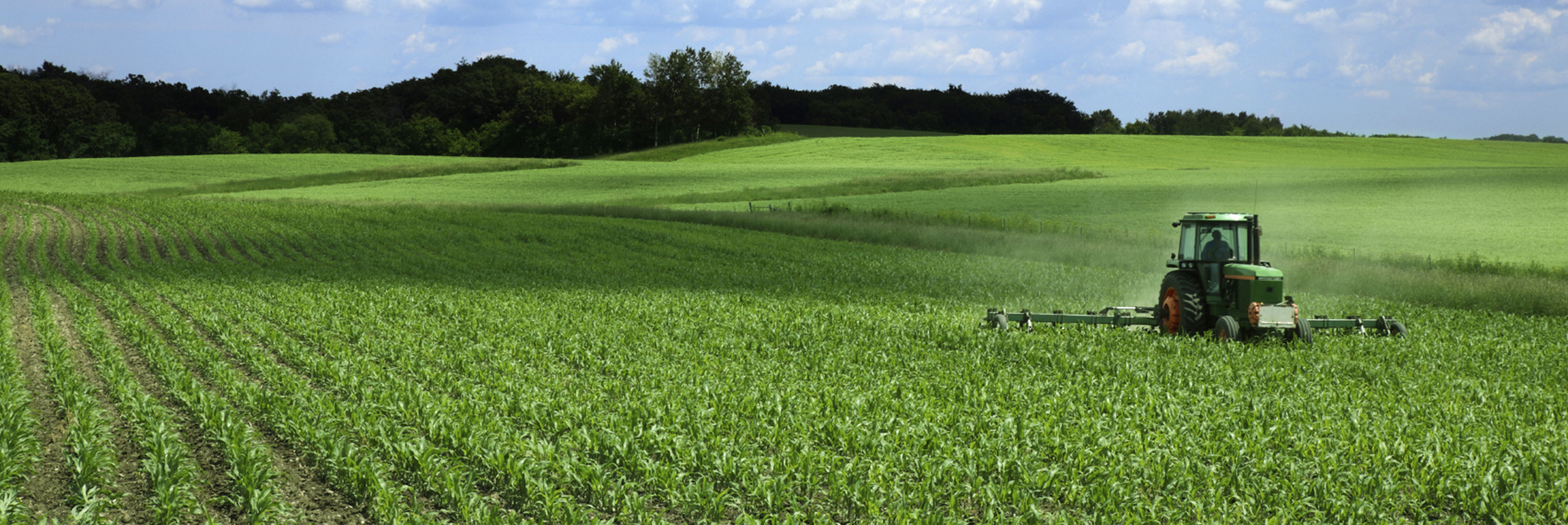
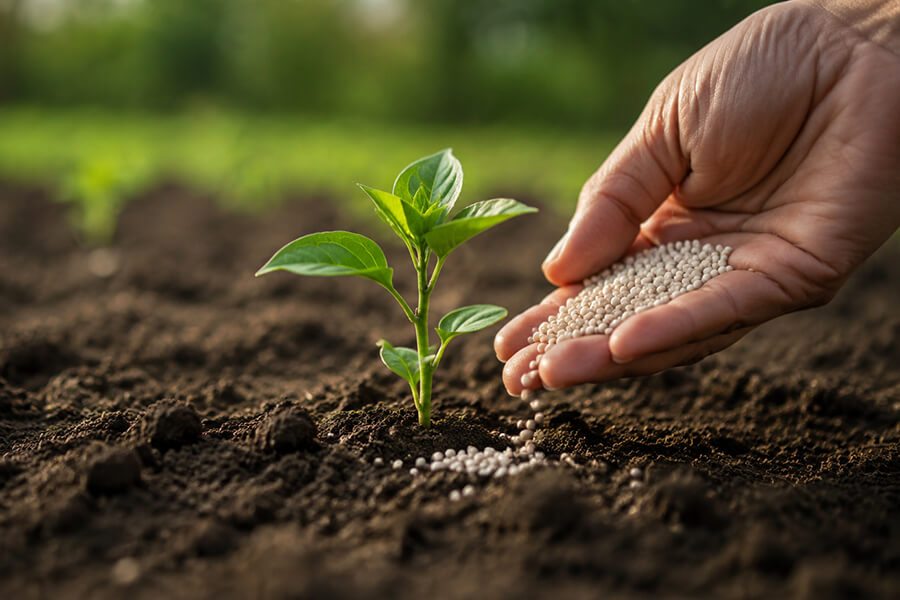
Achieving high yields, sustainable soil management, and premium crop quality comes down to feeding plants precisely, in balanced amounts, and at the right time. Just like humans, plants require specific essential nutrients to thrive. In agricultural production, nitrogen (N) serves as the primary engine for vegetative growth—the expansion of green plant tissue—making it the top priority in crop nutrition.
So, what is nitrogen fertilizer, the lifeblood of modern farming? What does it do, and how should it be applied without disrupting the ecological balance of our soils? Let us examine the chemical losses associated with traditional synthetic fertilizers alongside the next-generation organomineral nitrogen solutions developed through ARF BIO’s circular economy model.
What is Nitrogen Fertilizer?
Nitrogen fertilizer is a crop nutrition product designed to supply the soil with nitrogen, the primary macronutrient plants need most throughout their growth cycles. Although the air we breathe consists of approximately 78% nitrogen gas, plants cannot directly absorb this atmospheric form.
This is where nitrogen fertilizers come in. They are applied to the soil in forms that plant roots can readily absorb—such as ammonium nitrogen and nitrate nitrogen—or as urea nitrogen, which converts into available forms within the soil.
The Natural Nitrogen Cycle and Nitrogen's Role in Agriculture
In nature, nitrogen moves through a continuous cycle involving plants, animals, soil, and microorganisms. Lightning strikes and symbiotic Rhizobium bacteria residing in legume root nodules can fix atmospheric nitrogen into the soil. However, in modern intensive commercial farming, the amount of nitrogen naturally fixed by the soil falls far short of replacing the nutrients removed by high-yielding harvests.
Because nearly 90% of agricultural soils across Türkiye suffer from organic matter depletion, their capacity to maintain a natural nitrogen cycle has degraded. In chemically depleted and compacted soils, nitrogen fertilization steps in where natural processes fall short, re-establishing soil nutrient balance and building a foundation for sustainable production.
Why Nitrogen Losses Occur in Soil and How to Prevent Them
A major challenge shared by growers and agronomists is that crops rarely absorb 100% of applied traditional pure synthetic nitrogen. When pure chemical nitrogen is applied to soils with low organic matter, significant nitrogen losses occur through three primary pathways:
- Leaching: Nitrate nitrogen washing down past the root zone into groundwater due to excessive irrigation or heavy rainfall.
- Denitrification: Soil bacteria converting nitrogen into gas forms that escape into the atmosphere.
- Volatilization: Urea nitrogen evaporating into the air as ammonia gas.
To combat these economic and environmental losses, advanced slow-release fertilizer technologies and solid organomineral formulations enriched with organic matter have been developed. The solid and liquid organomineral nitrogen fertilizers produced at ARF BIO's integrated facility in Ödemiş, İzmir, utilize a stabilized organic base derived from biogas processing to help bind nitrogen to soil particles. Increasing soil organic matter directly raises its nutrient retention capacity. As a result, nitrogen does not evaporate or leach away; instead, it remains in the root zone to be delivered gradually and evenly as the crop demands it.
What Does Nitrogen Fertilizer Do? Key Benefits
Nitrogen is the primary architect governing the development of leaves, shoots, stems, and stalks—collectively known as vegetative growth. Its core functions in plant physiology include:
- Enables Chlorophyll Production: Nitrogen is a structural building block of chlorophyll, the green pigment responsible for photosynthesis. Strong photosynthetic activity directly translates to higher harvest tonnage and greater dry matter content.
- Triggers Rapid, Vigorous Growth: It promotes height growth during the vegetative phase, expands leaf canopy surface area, and thickens main stems for improved lodging resistance against strong winds.
- Supports Cell Division: By helping plant tissues multiply rapidly at a microscopic level, nitrogen accelerates crop establishment during sensitive early development phases (germination and seedling emergence).
- Boosts Yield and Crop Quality: Balanced nitrogen application supports vegetative canopy development, enhances photosynthetic rate, and drives yield potential. In cereal crops, it contributes to higher grain protein content and improved gluten quality under suitable growing conditions. In fruits and vegetables, balanced nitrogen nutrition supports fruit sizing and market appeal.
Cellular Functions of Nitrogen in Plant Physiology
Beyond expanding visible green biomass, nitrogen performs vital functions on a microscopic scale. It is a fundamental component of DNA and RNA, the genetic code of plants. It also plays a key role in synthesizing enzymes that regulate internal biochemical reactions, as well as plant growth regulators. From root architecture to flowering, and from internal nutrient transport to stress tolerance, nitrogen contributes to nearly every metabolic process.
Which Crops Require Heavy Nitrogen Application?
While nitrogen is an essential macronutrient for all green plants, certain strategic crop groups demand higher inputs due to their growth characteristics:
- Cereals (Wheat, Barley, Grain Corn, Paddy Rice): Require substantial nitrogen from tillering through stem elongation and grain fill. The high protein quality demanded by the milling industry depends heavily on proper top-dress applications. Nitrogen plays an essential role in silage corn production, a major driver for livestock farming in regions like the Aegean.
- Leafy Vegetables (Spinach, Lettuce, Cabbage, Arugula, Swiss Chard): The market value of these crops relies directly on leaf volume, crispness, and deep color. Utilizing liquid organomineral nitrogen fertilizers helps enhance commercial appearance and market grade.
- Industrial Crops (Cotton, Sugar Beet, Sunflower, Tobacco): Balanced nitrogen programs are vital for fiber quality in cotton, root tuber development in sugar beets, and overall leaf health in sunflower and tobacco crops.
- Fruit Trees and Vines (Olives, Citrus, Apples, Peaches, Grapevines): Spring applications support tree awakening, new shoot initiation, and uniform flowering for optimal fruit set.
- Forage Crops (Pasture Grasses, Hay): Supplying nitrogen based on soil tests and crop demand supports high-protein, leafy forage production for livestock feed.
Which Crops Require Little to No Nitrogen Fertilizer?
Legume crops such as beans, chickpeas, lentils, soybeans, and alfalfa harbor beneficial root nodules capable of fixing atmospheric nitrogen directly into the soil. As a result, intensive nitrogen fertilization is generally unnecessary for legumes beyond a small starter dose during early emergence. Applying excess nitrogen makes legumes dependent on synthetic inputs, causing them to stop forming bacterial nodules and shift energy into excessive stem elongation at the expense of pod and grain yields.
Additionally, applying raw, untreated animal manures to legume fields introduces high risks of weed infestation. To balance nitrogen levels and enrich these sensitive soils with organic matter, ARF BIO organic or organomineral fertilizers—processed through high-temperature biogas fermentation to eliminate weed seeds—offer a safe and reliable alternative.
Most Common Types of Nitrogen Fertilizers
Nitrogen fertilizers are available in several chemical forms and concentrations:
- Urea (46% Nitrogen): The solid fertilizer with the highest nitrogen content. Highly water-soluble, used for both base and top-dress applications.
- Ammonium Sulfate (21% Nitrogen): Commonly called "sugar fertilizer" due to its crystalline appearance. Supplies sulfur alongside nitrogen.
- Calcium Ammonium Nitrate (CAN - 26% Nitrogen): A fast-acting fertilizer frequently preferred in alkaline soils to maintain pH balance.
Differences Between Pure Chemical and Organomineral Nitrogen Sources
Significant structural differences exist between conventional synthetic chemical fertilizers and next-generation organomineral sources regarding long-term soil health and productivity:
Pure chemical nitrogen fertilizers (Urea, Ammonium Sulfate, etc.) offer high nutrient concentrations for rapid plant uptake. However, continuous application can increase soil electrical conductivity (salinity) and push pH levels toward extreme alkalinity or acidity. Alkaline conditions lock up other vital nutrients like iron, zinc, manganese, and phosphorus, rendering them unavailable to roots. Long-term, single-source or unmanaged chemical fertilizer use degrades soil organic balance, weakening physical structure and lowering productive capacity over time.
ARF BIO organomineral nitrogen solutions deliver fermented organic matter, rich humic and fulvic acids, and essential nitrogen forms together within each granule. Thanks to this organic base, they:
- Loosen heavy clay soils, reduce compaction, and improve soil aeration.
- Enhance root-zone gas exchange and microbial activity, helping optimize the uptake of key elements like carbon (C), oxygen (O), and hydrogen (H).
- Improve water, moisture, and nutrient retention, buffering crops against drought stress while reducing irrigation requirements.
Understanding Ammonium (NH4), Nitrate (NO3), and Urea Forms
Nitrogen appears in fertilizers in three primary chemical forms, each exhibiting distinct absorption rates and soil dynamics:
- Nitrate Nitrogen (NO3): Highly mobile within the soil solution and rapidly absorbed by roots. Preferred for urgent nitrogen demand or during cold weather when root activity slows. However, because it carries a negative charge, it cannot bind to negatively charged soil particles (colloids). Consequently, it carries a high risk of leaching away during heavy rainfall or over-irrigation.
- Ammonium Nitrogen (NH4): Carries a positive electrical charge, allowing it to bind securely to negatively charged clay and organic matter particles. It resists leaching and remains available for root absorption or gradual conversion into nitrate via soil nitrifying bacteria, ensuring sustained delivery.
- Urea Nitrogen (CO(NH2)2): Cannot be absorbed directly by plant roots in its initial state. It converts first into ammonium and then into nitrate through soil enzymes (urease) and microbial activity. Because this process takes several days depending on soil temperature and moisture, urea provides a sustained, economical top-dressing option.
Identifying Nitrogen Deficiency Symptoms
Recognizing nitrogen deficiency in crops is straightforward. When soil nitrogen levels are low, plants exhibit clear signs:
- Leaf Yellowing (Chlorosis): Symptoms appear first on older, lower leaves. Leaves lose their deep green color and turn pale yellow.
- Stunted Growth: Plants remain small and bushy with reduced height.
- Premature Flowering and Reduced Yield: Plants initiate early flowering to reproduce before dying, resulting in low fruit or grain production.
Specific Symptoms Across Crop Types
- Corn and Small Grains: Yellowing begins at the leaf tip and progresses along the midrib in a distinct "V" pattern.
- Fruit Trees: Shoot length decreases, leaves stay undersized and drop prematurely in autumn, and bark may develop a reddish tint.
- Vegetables: Stems become thin and woody. In tomatoes, leaf petioles turn erect while lower leaves develop a purplish-yellow color.
Risks of Excessive Nitrogen Application
The belief that "applying more fertilizer yields more crop" is a harmful misconception. Uncontrolled, heavy nitrogen application leads to severe issues:
- Cell walls become thin, soft, and watery, leaving crops vulnerable to fungal diseases (powdery mildew, rust, root rot) and insect pests (aphids, spider mites, thrips).
- Plants focus exclusively on vegetative growth (leaves and shoots), delaying flowering, pollination, and fruit set, leading to misshapen, bland fruit.
- Increased soil salinity alters root osmotic pressure. Roots become unable to draw water from the soil, causing salt burn and plant wilting.
- Nitrogen runoff into waterways triggers eutrophication (algal blooms and oxygen depletion), threatening aquatic ecosystems.
Application Timing and Best Practices
Nitrogen is a highly mobile element prone to volatilization and leaching. Rather than applying all required nitrogen at once, splits should be aligned with critical growth stages (tillering, stem elongation, fruit sizing, or spring bud break).
Broadcasting unprotected nitrogen immediately before heavy rains or during hot, dry weather leads to significant losses through gas evaporation or deep leaching below the root zone. ARF BIO organomineral formulations shield nitrogen within a fermented organic matrix, providing greater application flexibility. In modern drip irrigation systems, fertigating liquid organomineral nitrogen in split doses optimizes nutrient use efficiency.
Frequently Asked Questions (FAQ)
When should nitrogen fertilizer be applied?
Nitrogen should be split across vegetative and generative growth stages rather than applied in a single pass. Typically, the first portion is placed at or just before planting below the seed line (as a base or starter fertilizer). Subsequent applications are made during active growth, tillering, stem elongation, or pre-flowering stages (as top-dressing).
Which fertilizer has the highest nitrogen content?
Among commercial mineral fertilizers, urea contains the highest concentration at approximately 46% nitrogen. Among organic sources, composted poultry manure and specific liquid organic products offer higher nitrogen levels depending on raw material inputs and processing.
ARF BIO integrates these nitrogen sources with fermented organic matter from biogas reactors, creating high-grade organomineral solutions that minimize nutrient losses and reduce root burn risks when applied at proper rates.
Can nitrogen fertilizer be applied as a foliar spray?
Yes. During periods of low root activity, cold soil temperatures, drought, or nutrient lock-up, foliar applications of liquid organomineral nitrogen provide rapid nutrient absorption directly through the leaf surface. ARF BIO's fully filtered liquid organomineral products are safe for use in drip irrigation systems and boom sprayers without clogging nozzles or filters.
Does nitrogen fertilizer alter soil pH?
It depends on the chemical form and its transformation in the soil. For example, traditional synthetic Ammonium Sulfate (21% N) exerts an acidifying effect over time, making it suitable for alkaline (calcareous) soils. Calcium Ammonium Nitrate (CAN 26%) includes lime to help neutralize acidity. ARF BIO organomineral formulations support microbial activity and help buffer against rapid pH fluctuations and salt accumulation.
When should nitrogen be applied to fruit trees?
In orchards and olive groves, nitrogen is typically applied in early spring as trees break dormancy, sap flow begins, and new shoot growth starts. Applying nitrogen within the drip line supports flower bud development and shoot elongation. Late autumn applications are generally discouraged, as late vegetative growth may fail to harden off before winter freezes.
Should nitrogen fertilizer be applied during rain?
Applying top-dress nitrogen during light, drizzling rain helps dissolve the product into the soil solution and reduces gas volatilization. However, applications should be avoided during heavy downpours or torrential rain, as excessive surface runoff increases leaching risks regardless of the nitrogen form used.
What are the main sources of organic nitrogen?
Common sources used in organic farming include well-fermented livestock manures, plant composts, processed poultry manure, blood meal, and feather meal. While these sources rebuild soil organic matter, their nutrient release is gradual. Organomineral fertilizers combine this organic foundation with mineral nutrients (NPK) to deliver immediate availability along with long-term soil benefits.
Can nitrogen fertilizer burn plants?
Applying excessive doses or placing fertilizer directly against growth points under hot, dry conditions can cause salt burn. High salt concentrations in the root zone raise osmotic pressure, restricting water uptake. ARF BIO organomineral solutions help reduce salt burn risks when used at recommended rates thanks to their balanced organic matter content.
Choosing the Right Nitrogen Fertilizer for High Yields
Delivering nitrogen in the right form, at the right rate, and at the right time boosts current harvest yields and profitability while protecting long-term soil health. Educating growers on organomineral programs and the benefits of fermented organic inputs supports sustainable agricultural production.
Adopting scientific, sustainable, and circular solutions is one of the most valuable investments in modern farming. At ARF BIO, we combine fermented organic matter from biogas technology with mineral nutrients through advanced production methods, supporting sustainable, high-yield agriculture with our solid and liquid organomineral portfolio.