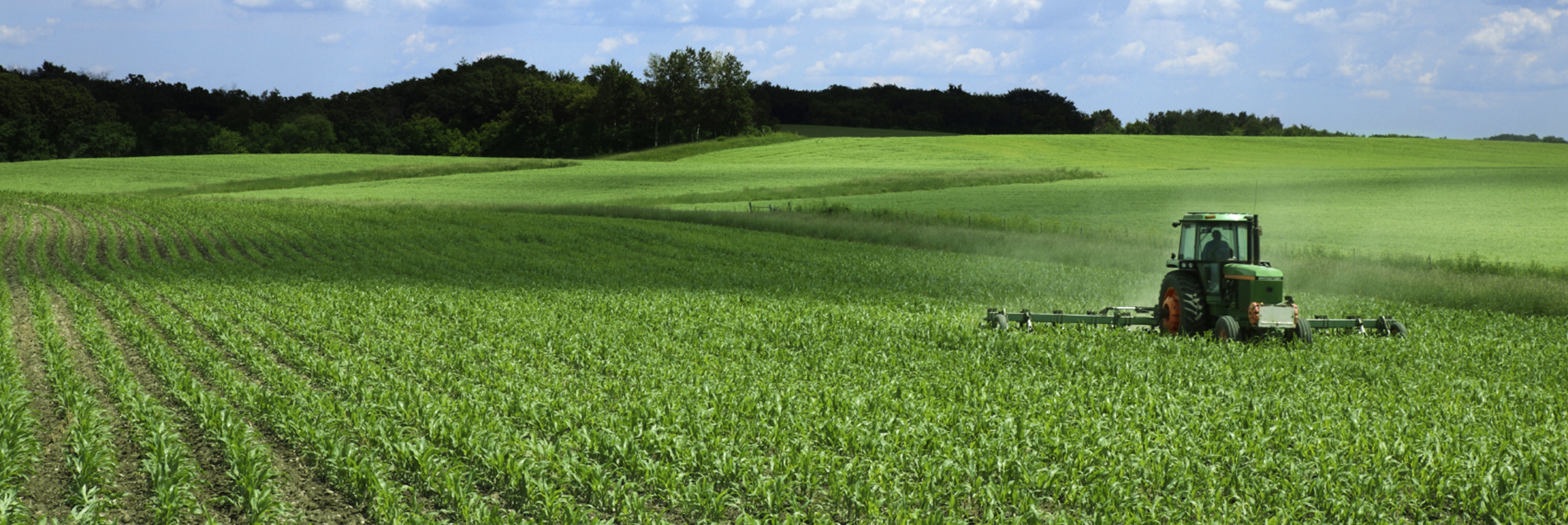
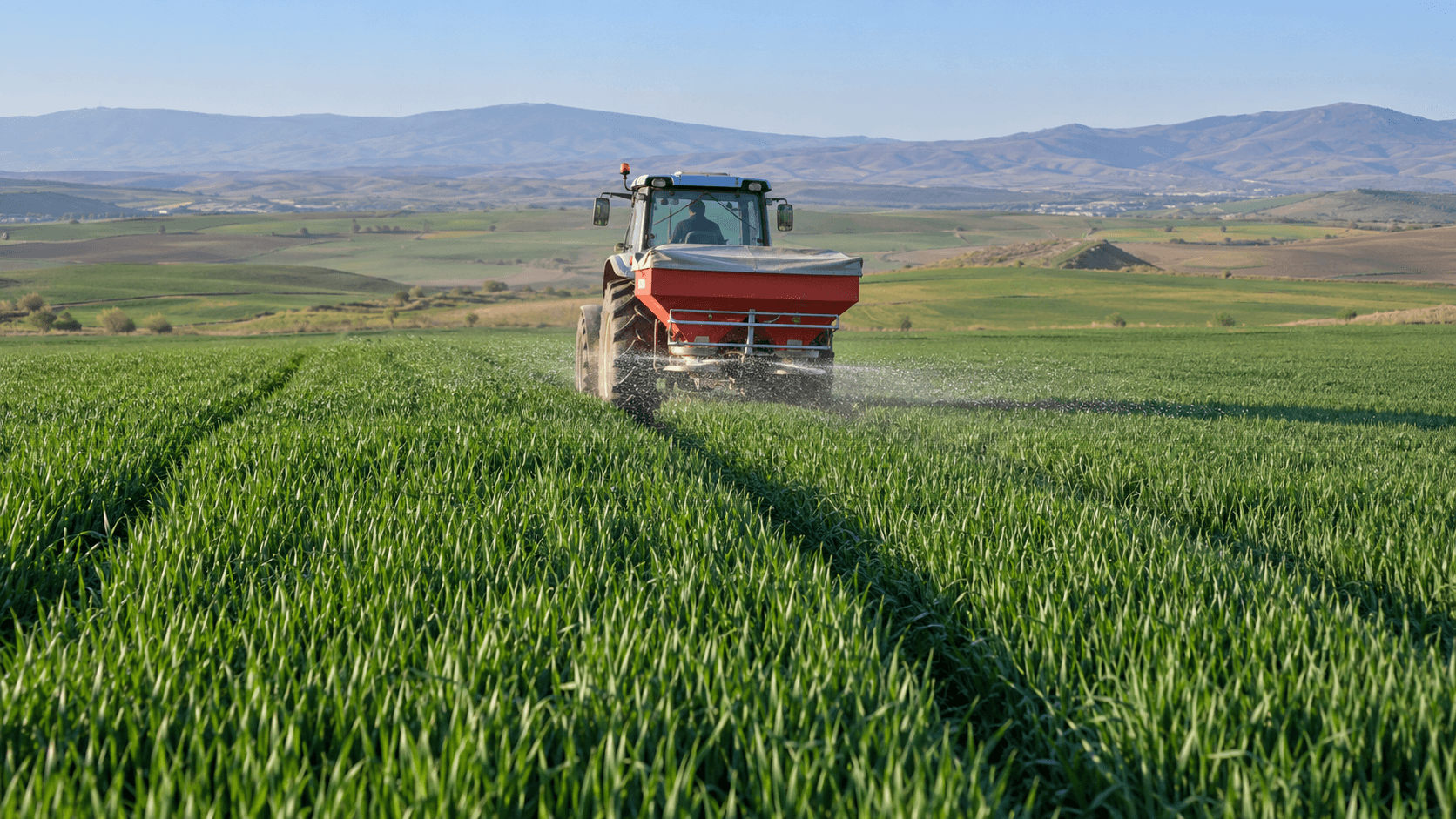
Fertilizing wheat involves more than applying fertilizer at sowing. It means meeting the crop’s changing nutrient requirements at the right time, from root development and tillering through stem elongation and grain filling. A wheat fertilization program should take soil test results, the previous crop, rainfall, irrigation availability, the wheat variety and target yield into account together.
There is no single answer to questions such as which fertilizer to use on wheat, when to top-dress wheat or how to increase wheat yields. Fields do not all have the same nutrient reserves, water-holding capacity or cropping history. Effective fertilization means building a balanced program that matches the soil’s needs to the crop’s growth stage.
This guide explains which fertilizers can be considered at wheat sowing, the difference between basal fertilizer and top-dressing, and how nutrient management decisions change from tillering to stem elongation. We also cover the timing of urea applications, the importance of rainfall and irrigation, and the role of organic and organomineral fertilizers in the program.
Why Is Fertilization Important for Wheat?
As wheat develops, it requires nitrogen, phosphorus, potassium, sulfur, zinc and other nutrients. A deficiency in any one of these can limit root development, tillering, ear formation or the crop’s ability to fill the grain. Fertilization helps address these deficiencies through the right product applied at the right time.
Increasing wheat yields does not simply mean using more fertilizer. Excessive applications or poorly timed fertilization can raise costs and disrupt balanced crop growth. The aim is to supply the nutrients the crop needs under conditions that allow the roots to take them up.
Balanced fertilization supports not only this season’s harvest but also the field’s long-term production plan. When growers understand which nutrients they are applying and why, they can manage their budgets more effectively and avoid unnecessary treatments. This is the central reason fertilization matters in wheat. The goal is to correct nutrient deficiencies, make good use of available resources and support crop development through a program that can be monitored throughout the season.
The Right Start for a Productive Season
Wheat yield potential begins to take shape before the seed even enters the soil. A well-prepared seedbed, suitable sowing depth and balanced basal fertilization help the crop get off to a strong start during early growth.
A root system that develops poorly in the early stages may struggle to access water and nutrients in the months that follow. When selecting a fertilizer for wheat sowing, it is therefore important to look beyond the nitrogen content and consider phosphorus, as well as potassium, sulfur, zinc and organic matter where needed.
During sowing preparations, how evenly the fertilizer will be distributed across the field is just as important as product selection. Check the fertilizer settings on the seed drill and confirm that the amount delivered matches the planned rate per decare (1,000 m²). Applying too much fertilizer to one part of a field and too little to another can lead to uneven crop development. A good start therefore involves more than buying the product. Equipment checks and application records are also part of the preparation.
What Determines Wheat’s Nutrient Requirements?
Wheat’s nutrient requirements vary with the variety grown, soil characteristics, organic matter content and target yield. A nutrient program for a rainfed field will differ from one for an irrigated field. The amount of water available to the crop directly affects how much of the supplied nutrients it can use.
The previous crop should also be considered when planning wheat fertilization. Soil conditions after a legume crop may differ from those following a crop with high nutrient demand. Farmyard manure, organic fertilizers and earlier mineral fertilizer applications should also be included in the seasonal plan.
Past field performance provides a useful reference when setting a yield target. Rather than treating the best season’s yield as a fixed target every year, consider water availability, sowing conditions and the variety being grown together. This helps prevent unnecessary nutrient applications in pursuit of an unrealistic target. The fertilization budget should reflect the field’s actual needs, rather than product prices alone.
How Should a Wheat Fertilization Program Be Planned?
A wheat fertilization program begins before sowing and continues through to harvest. The first step is to understand the field’s current nutrient status. Basal fertilization, tillering-stage applications and top-dressing can then be planned around the crop’s growth stages.
The nutrient contribution of every product used should be calculated when developing the program. Nitrogen supplied by the basal fertilizer must not be considered separately from the amounts of urea, ammonium sulfate or calcium ammonium nitrate (CAN) applied later. Keeping track of the total nitrogen supplied throughout the season is essential for balanced nutrition.
A simple field record created at the start of the season can make the plan easier to put into practice. It can include the sowing date, the basal fertilizer used, the rate applied per decare and the date of the next field check. If rainfall or crop development differs from expectations, these details help show which decisions need to be revised. The wheat fertilization program then becomes a working plan that responds to seasonal conditions, rather than a fixed recipe.
Why Should You Start with a Soil Test?
Soil testing is the foundation of a wheat fertilization program. It provides information on soil pH, organic matter content, salinity and plant-available nutrients. This allows nutrient priorities to be identified from data rather than guesswork.
For example, a low soil phosphorus level may make a phosphorus-containing basal fertilizer a priority. If potassium is already adequate, it may be better to address another deficiency instead of spending unnecessarily on a potassium-containing product. The same principle applies to zinc, sulfur and organic matter management.
When interpreting the report, it is helpful to give the laboratory information about the field’s cropping and management history. The previous crop, irrigation status and earlier fertilizer applications help tailor recommendations to field conditions. When taking samples, ask the laboratory how to handle areas with distinctly different soil characteristics. Places where fertilizer has been piled, or other spots that represent unusual conditions, should not be treated as representative of the entire field.
The Influence of Climate, Rainfall and Soil Characteristics
Soil moisture and the short-term weather forecast should be considered before applying fertilizer to wheat. Fertilizer applied to very dry soil may take longer to become available to the crop. Surface applications made just before very heavy rain can also create a risk of nutrient loss.
Nutrient leaching may be more likely in sandy soils. In heavy clay soils, waterlogging can restrict root aeration and nutrient uptake. The same fertilization method will therefore not produce the same results in every soil.
Checking the weather forecast is a practical and important step when choosing an application day. Consider not only whether rain is expected, but also its intensity and the field’s current condition. Rushing an application on saturated soil that is difficult to work may be inappropriate. The balance between waiting for suitable conditions and avoiding a delay in meeting the crop’s nutrient needs should be guided by local field observations and technical advice.
Does Fertilization Vary with the Wheat Variety?
Wheat varieties can differ in tillering capacity, time to maturity, lodging resistance and quality characteristics. These differences are particularly important when planning nitrogen fertilization. Excess nitrogen requires especially careful consideration in fast-growing varieties or those susceptible to lodging.
Quality targets may also differ between durum wheat and bread wheat. Protein and grain quality objectives can influence the details of the nutrient program. These differences do not, however, justify using a standard fertilizer program without soil testing.
Which Fertilizer Should Be Used on Wheat?
The question of which fertilizer to use on wheat cannot be answered with a single product name. When selecting a fertilizer for sowing, soil phosphorus, potassium, sulfur, zinc and organic matter levels must be considered alongside the previous crop and target yield. Basal fertilizer at sowing and in-season top-dressing are parts of the same plan.
When deciding when to fertilize wheat, the crop’s growth stage matters more than the calendar. Basal fertilization before or at sowing may be followed by applications at tillering and stem elongation, according to crop development and field conditions. Soil test results and the current product label should guide the final program.
When comparing fertilizers, it is important to understand the formulation shown on the bag. Review nitrogen, phosphorus and potassium levels separately from additional components such as organic matter, sulfur or zinc. Two bags of the same weight may not supply the same amount of nutrients to the field. Rather than considering only the price per kilogram, assess which product and application plan will meet the crop’s actual nutrient needs.
Which Fertilizer Should Be Used at Wheat Sowing?
The choice of fertilizer at wheat sowing depends on the nutrients that are most important during early growth. Where phosphorus is a priority, phosphorus-containing NP or NPK formulations may be considered. If soil testing identifies a need for potassium, sulfur, zinc or organic matter, the formulation should be selected accordingly.
Organomineral fertilizers with different nutrient profiles, such as ARF BİO 8-21-0, ARF BİO 11-11-11 + 10 SO₃ and ARF BİO 6-16-6 + 10 SO₃, may be considered for basal fertilization in wheat, subject to the uses stated on their labels. Suitability should be determined by how well the nutrient content matches the field’s needs, rather than by the product name.
The effect of the sowing fertilizer on later top-dressing decisions should also be calculated. For example, nitrogen supplied by a basal fertilizer must be included in the seasonal nitrogen plan. Other nutrients in a product selected to meet phosphorus demand should not be overlooked. To compare ARF Bio’s basal fertilizer options, contact us with your soil test report and request technical information about how the products are used.
When Should Urea Be Applied to Wheat?
The timing of urea applications in wheat should be considered as part of the top-dressing schedule. Urea is a fertilizer with a high nitrogen content. Before deciding when to apply it, check whether the crop is at tillering or stem elongation, assess soil moisture and expected rainfall, and account for nitrogen already applied at sowing.
Urea left on the soil surface can be subject to nitrogen loss. Application method, rainfall or irrigation availability and the product label therefore require careful consideration. Recommending the same month or application rate for every field is inappropriate. Technical advice and soil testing help make nitrogen applications more reliable.
When considering a urea application, it is important to know when previous fertilizers were applied and in what amounts. A green-looking crop, or an application taking place in a neighboring field, is not enough on its own to justify a decision. Nitrogen requirements should be assessed alongside crop development and the seasonal program. Recording field observations after application also supports later decisions. The goal is to manage crop nutrition through complementary applications, rather than a single isolated treatment.
In Which Month Should Basal Fertilizer Be Applied?
The month in which basal fertilizer is applied depends on the wheat sowing date. Basal fertilizer is generally applied before or at sowing. The application month therefore varies with the regional climate and sowing season.
The aim is to place the nutrients needed for early growth within reach of the roots. Check seed drill settings and the application method to prevent direct contact between seed and fertilizer. Product label instructions, equipment settings and soil test results should all be considered together.
What Does Basal Fertilizer Do for Wheat?
Basal fertilizer supplies nutrients needed at sowing and during early wheat growth. The term does not refer to a single product. Different NP, NPK, DAP, organic or organomineral products can be used as basal fertilizers, depending on their formulations and the field’s needs.
When selecting a basal fertilizer for wheat, check soil phosphorus, potassium, zinc and organic matter levels. A product with a high nitrogen content alone may not meet all the crop’s needs at sowing. A balanced formulation should be chosen to suit the field.
The Importance of Phosphorus for Root Development
Phosphorus is an essential nutrient involved in energy transfer and early plant growth. It helps wheat develop a healthy root system and establish strongly in the early stages. Phosphorus fertilization is therefore considered an important part of basal fertilization in wheat.
The presence of phosphorus in the soil does not always mean the crop can readily take it up. Soil pH, temperature, moisture and soil characteristics affect phosphorus availability. Phosphorus requirements should be established from soil test results.
How Can Organomineral Fertilizers Be Used at Sowing?
Organomineral fertilizers are an option for wheat growers seeking to supply mineral nutrients and organic components in the same product. Their compositions vary from one product to another. Product selection should therefore always be based on label specifications and soil test results. The following ARF Bio organomineral products may be considered for basal fertilization in wheat.
ARF BİO 8-21-0
ARF BİO 8-21-0 is a solid NP organomineral fertilizer suitable for basal application in wheat and barley. It contains 8% total nitrogen, 21% total phosphorus pentoxide, 20% organic matter, 5% total humic and fulvic acids, and 0.1% zinc. The label specifies an application range of 30–50 kg per decare for wheat and barley.
It may be considered in fields where phosphorus is a priority. The phosphorus and nitrogen supplied by the product should each be accounted for in the basal nutrient plan. Its organic matter and humic and fulvic acid contents are additional characteristics to consider when assessing its suitability.
ARF BİO 11-11-11 + 10 SO₃
ARF BİO 11-11-11 + 10 SO₃ is a solid NPK organomineral fertilizer containing equal proportions of nitrogen, phosphorus and potassium. It contains 11% total nitrogen, 11% phosphorus pentoxide, 11% potassium oxide, 15% organic matter, 10% sulfur expressed as SO₃, 5% total humic and fulvic acids, and 0.1% zinc.
It can be considered as a basal fertilizer where nitrogen, phosphorus and potassium requirements need to be addressed together. The label specifies an application range of 40–60 kg per decare for wheat and barley.
ARF BİO 6-16-6 + 10 SO₃
ARF BİO 6-16-6 + 10 SO₃ is a solid NPK organomineral fertilizer with a higher phosphorus proportion. It contains 6% nitrogen, 16% phosphorus pentoxide, 6% potassium oxide, 15% organic matter, 10% sulfur expressed as SO₃, 5% total humic and fulvic acids, and 0.1% zinc.
It can be included in a basal fertilization program where phosphorus is a priority and potassium supplementation also needs consideration. The label specifies an application range of 40–60 kg per decare for wheat and barley.
ARF NOPS
ARF NOPS is a solid organomineral fertilizer containing nitrogen, phosphorus and sulfur. It contains 12% total nitrogen, 12% total phosphorus pentoxide, 25% sulfur expressed as SO₃, and 15% organic matter. It also contains humic and fulvic acids.
It may be considered among the basal fertilizer options for wheat fields where sulfur is needed alongside nitrogen and phosphorus. The label specifies an application range of 25–40 kg per decare for wheat, barley, rye and oats.
The application ranges shown on the labels do not represent a single, fixed rate for every field. Product suitability should be determined by how well its nutrient content matches the needs identified in the soil test, rather than by its name. To assess how these products fit your field’s program, contact ARF Bio with your soil test report and request technical advice.
Fertilizing Wheat During Emergence and Tillering
Fields should be monitored regularly after wheat emergence. Plant density, leaf color, root development, weed pressure and the extent of tillering help inform subsequent fertilizer decisions. It is important to inspect several locations in the field rather than judge it only from a distance.
Tillering is the growth stage in which the wheat plant produces side shoots alongside the main stem. Healthy tillering can contribute to the development of shoots capable of bearing ears. The crop’s current development should be taken into account when planning nutrition at this stage.
Why Is Tillering a Critical Stage?
Tillering is one of the key growth stages affecting wheat yield, because a sufficient number of healthy tillers can bear ears under suitable conditions. Increasing tiller numbers alone does not, however, guarantee a higher yield at harvest.
The aim is not simply to produce a large number of shoots, but to develop tillers with strong root systems that can remain healthy through to the end of the season. Late sowing, low temperatures, insufficient moisture and disease pressure can all restrict tillering.
Comparing different parts of the field gives a more reliable picture of tillering. Growth at the edges may differ from growth farther inside the field. In areas with low plant density, it should not be assumed that extra fertilizer will solve every problem. Applications made without identifying the cause of poor emergence and assessing the surviving plants may not deliver the expected result. Nutrient decisions should consider root development and overall field conditions as well as shoot numbers.
Why Is Balance Important in Nitrogen Application?
Nitrogen plays an important role in vegetative growth and protein formation in wheat. Too little nitrogen can limit growth. Too much can cause excessive vegetative development, increase lodging risk and make the crop more susceptible to certain diseases.
Nitrogen applied at sowing must always be included when planning nitrogen fertilization in wheat. Nitrogen from the basal fertilizer and nitrogen applied through top-dressing should be assessed together. This helps prevent the crop from receiving more nitrogen than it needs over the season.
What Should Be Checked in Fields with Poor Emergence?
Poor wheat emergence does not always indicate a fertilizer deficiency. Sowing depth, soil moisture at sowing, surface crusting, seed quality, cold stress, diseases and pests can also affect emergence. The cause of the problem should be identified first.
Likewise, nitrogen deficiency should not be assumed to be the only cause of yellowing in wheat. Sulfur deficiency, inadequate root aeration, waterlogged areas, diseases and certain herbicide effects can produce similar symptoms. Where necessary, decisions based on visual observations should be supported by soil and plant tissue tests.
Observing how symptoms are distributed across the field can help identify the cause. Yellowing confined to waterlogged patches may call for a different assessment from yellowing across the entire field. Photographing plants, recording the application history and, where necessary, inspecting the crop with a specialist may be more useful than changing fertilizers on the basis of a guess. Especially when problems develop quickly, the first aim should be to understand the cause rather than increase fertilizer rates.
Fertilizing Wheat During Stem Elongation
Stem elongation is a stage of rapid wheat growth when nutrient requirements become particularly important. The crop begins to gain height, the developing ear progresses and the season’s yield potential becomes clearer. Top-dressing decisions therefore need careful consideration.
Top-dressing wheat does not replace basal fertilization. It complements the nutrition provided at sowing. Basal fertilization and top-dressing are interconnected parts of the same seasonal program.
When Should Wheat Be Top-Dressed?
The right time to top-dress wheat varies between regions. Sowing date, winter severity, rainfall patterns and the rate of development of the wheat variety all affect application timing. A fixed month will therefore not be appropriate for every grower.
Check whether the crop is at tillering or stem elongation when considering an application. Field development should be more decisive than the calendar. Applying too early or too late can change how effectively the crop uses the nutrients.
The final check before top-dressing should involve more than consulting the calendar. Assess crop development, previous nitrogen applications and current soil moisture together. If expected rain has not arrived or the crop is developing more slowly than planned, the program may need to be reassessed. Recording why a change was made helps explain which applications took place under which conditions at the end of the season and provides a stronger starting point for the following year’s plan.
How Is ARF NOS Used as a Top-Dressing Fertilizer for Wheat?
ARF NOS is a solid nitrogenous organomineral fertilizer suitable for spring top-dressing. It contains 12% total nitrogen, 20% organic matter, 30% sulfur expressed as SO₃, and 10% total humic and fulvic acids.
During growth stages when wheat needs nitrogen, it may help address nitrogen and sulfur requirements together. The product catalog states that it contributes to vegetative growth and helps support root formation and nutrient uptake. The label specifies an application range of 50–60 kg per decare for wheat and barley.
When considering ARF NOS, its nitrogen contribution must be calculated alongside nitrogen already applied during the season. Sulfur and organic components are other product characteristics, but they do not in themselves guarantee the same yield increase in every field. When choosing a top-dressing option, match the crop’s needs with the application stage and label information. For advice on suitable ARF Bio products for your wheat field, contact us with your sowing and fertilization records.
How Do Rainfall and Irrigation Affect Fertilizer Application?
Suitable moisture conditions are needed for the crop to use surface-applied nitrogen fertilizers. Moderate rainfall or irrigation after application can help move nutrients into the root zone. Excessive rainfall, however, can increase the risk of losses, particularly on sloping land.
When using urea, consider the risk of fertilizer remaining on the surface and losing nitrogen. Application method, the product label and field moisture conditions should all be assessed. In irrigated wheat, irrigation and fertilizer schedules should be coordinated.
What Are the Risks of Applying Too Much Nitrogen?
Applying extra nitrogen to wheat does not always produce more ears or more grain. It can lead to excessive height, weaker stems and a greater risk of lodging. Lodged wheat is harder to harvest and may suffer yield losses.
Excess nitrogen can also produce dense growth with soft plant tissues, potentially increasing disease risk. Balanced nitrogen management should therefore replace the assumption that more nitrogen always means more yield.
Using Organomineral and Organic Fertilizers in Wheat
Organomineral fertilizers are one of the product groups that combine mineral nutrients with organic components for wheat production. In addition to major nutrients such as nitrogen, phosphorus and potassium, they may contain organic matter, humic and fulvic acids, sulfur or zinc. Formulations vary by product.
Organic and organomineral fertilizers can serve different objectives within a nutrient program. A sound assessment focuses on composition rather than the product name. The words organic or organomineral alone do not guarantee a high yield in every field.
Organic and organomineral fertilizers should not be viewed as direct equivalents. Differences in mineral nutrient levels, organic matter content and application method can change their roles in the program. Considering two products together requires a total nutrient plan that avoids counting the same contribution twice. Organic matter management should not be reduced to a single product choice either. The field’s management history and production conditions are also important.
What Are the Common Mistakes in Wheat Fertilization?
Mistakes in wheat fertilization affect production costs as well as crop growth. An unsuitable product, an unnecessary rate or poor timing can prevent the fertilizer from delivering the expected benefit.
One of the most common problems is following established habits without reassessing them. A program used in the past may not produce the same result when soil and seasonal conditions change. Field records, test results and crop observations should be considered together.
Choosing Fertilizer Without a Soil Test
Selecting fertilizer without a soil test means guessing which nutrients are needed. This can lead to an essential nutrient being overlooked while another that is already sufficient is applied unnecessarily. Both costs and nutritional balance can be adversely affected.
Having the soil tested is not enough on its own. Samples must be taken correctly, and the results interpreted for wheat production. Fertilizer selection should be based on the report and the field’s production conditions.
Applying All the Nitrogen at Once
Applying the crop’s entire seasonal nitrogen requirement at sowing is not suitable under all conditions. Excess nitrogen supplied early may not match the crop’s needs in later months. Depending on rainfall, soil conditions and fertilizer form, nutrient losses may also occur.
Splitting nitrogen applications by growth stage can help match nutrient supply to crop demand. The number and distribution of applications should be determined by regional conditions.
Basing the Fertilization Program on a Neighboring Field
Two adjacent fields may have different soil characteristics and management histories. The previous crop, organic matter levels, drainage and irrigation availability can widen those differences. A fertilizer that works well in a neighboring field may not perform the same way in yours.
Other growers’ experiences can provide a useful starting point. The final decision, however, should be based on your own soil test results and crop development. Increasing wheat yields depends on understanding your conditions rather than simply copying someone else’s practice.
When comparing field experiences, find out not only which product was used but also the application rate, sowing date and water conditions. Two growers may obtain different results even when using the same fertilizer. That difference does not prove that the fertilizer alone was successful or unsuccessful. Keeping application records in your own field helps you make more meaningful comparisons in later seasons and prevents decisions from being based solely on hearsay.
Frequently Asked Questions About Wheat Fertilization
Most questions about wheat fertilization concern choosing the right product and the right time. When considering the answers, remember that field conditions are decisive. General information becomes more useful when combined with test results and technical assessment.
The following answers provide general guidance. Final product selection and application rates should be based on the current product label, soil test results and advice from a qualified technical specialist.
Which Fertilizer Is Applied First to Wheat?
The first fertilizer application in wheat is usually the basal application made before or at sowing. The product is selected according to soil phosphorus, nitrogen, potassium, zinc and organic matter levels.
NP, NPK, DAP or organomineral fertilizers may be considered under different conditions. When choosing the first fertilizer, plan the top-dressing applications to be made later in the season as well.
When Is Basal Fertilizer Applied to Wheat?
Basal fertilizer is applied before or at wheat sowing. The aim is to supply nutrients for early growth in a zone the roots can reach.
Sowing dates vary between regions, so basal fertilizer is not applied on the same date everywhere. Product label instructions, seed drill settings and field conditions at sowing should be taken into account.
When Is Wheat Top-Dressed?
Top-dressing wheat is considered during tillering and stem elongation. The precise timing varies with crop development, regional climate conditions and the sowing date.
Before applying fertilizer, check soil moisture, expected rainfall and previous nitrogen applications. Basing the decision on the crop’s growth stage rather than the calendar leads to a better-informed application.
Can Organomineral Fertilizers Be Used on Wheat?
Organomineral fertilizers can be used on wheat. Their nitrogen, phosphorus, potassium, organic matter, humic and fulvic acid, and other nutrient contents should be assessed against the field’s needs.
Organomineral products used as basal fertilizers may differ from those used for top-dressing. Check the intended application stage and label information when selecting a product.
How Is the Fertilizer Rate for Wheat Determined?
The fertilizer rate for wheat is calculated from the nutrient requirement established through soil testing and the nutrient concentration of the product. Target yield, irrigation availability, the previous crop and the total nutrients to be supplied throughout the season must also be considered.
The rate per decare is not the same for every field. The ranges shown on the label are guidelines. Obtaining technical advice is the best way to determine the appropriate application.
It is also important not to confuse units when calculating nutrient rates. Kilograms of product, kilograms of nutrients and the application rate per decare are not the same thing. Converting a soil test recommendation into a number of bags without first understanding its units can lead to an incorrect application. Spreading the calculated amount evenly across the field is another essential part of the plan. Checking fertilizer equipment settings helps prevent a correctly calculated rate from being applied incorrectly in the field.
Calculating Wheat Fertilizer Requirements per Decare:
As the sowing season approaches, how many kilograms of ARFBİO 8-21-0 should be applied per decare? Let’s work through a simple calculation.
Fertilizer required (kg/decare) = P₂O₅ required (kg/decare) / fertilizer P₂O₅ fraction
For example, suppose the soil test recommends applying 8 kg of P₂O₅ per decare to this field.
Fertilizer required (kg/decare) = 8 / 0.21
The calculated fertilizer rate is 38.09 kg per decare. Using approximately 39 kg of ARFBİO 8-21-0 per decare therefore supplies the following amounts.
Per decare: 8.19 kg of P₂O₅ and 3.12 kg of nitrogen are added to the soil.
Why did we base the calculation on phosphorus?
For high-phosphorus basal fertilizers, the rate is usually calculated from the phosphorus requirement. The remaining nitrogen (N) is then supplied through top-dressing.
Note: The appropriate fertilizer rate may vary with soil test results, target yield, the previous crop and regional climate conditions. This calculation is provided only to demonstrate the method. Soil testing should be carried out before fertilization to identify nutrient deficiencies.
Which Fertilizer Should Be Used to Increase Wheat Yields?
To increase wheat yields, first identify the factor limiting production. If nutrient deficiency is the problem, appropriate fertilization can support yield potential. If water stress, disease, unsuitable sowing practices or soil compaction are involved, changing fertilizer alone may not be enough.
ARF Bio’s organic, organomineral and mineral fertilizers can be considered at different growth stages and for different nutrient requirements. Contact ARF Bio to compare suitable products for your wheat field and obtain technical information.
ARF Bio: The Right Choice for Wheat Fertilization
A productive wheat season begins with understanding the soil’s needs and feeding the crop according to its growth stages. Every application, from basal fertilization to top-dressing, is a complementary step within the same program.
At ARF Bio, we offer organic, organomineral and mineral fertilizer options to address different nutrient needs in wheat production. When selecting the right product for your field, we encourage you to look beyond its name and focus on its composition, application stage and your soil test results.
Contact us to compare our products, learn how they are used and assess the options suited to your field as you develop your wheat fertilization program. Together, we can build a better-informed nutrient plan based on your soil’s needs and your production goals.