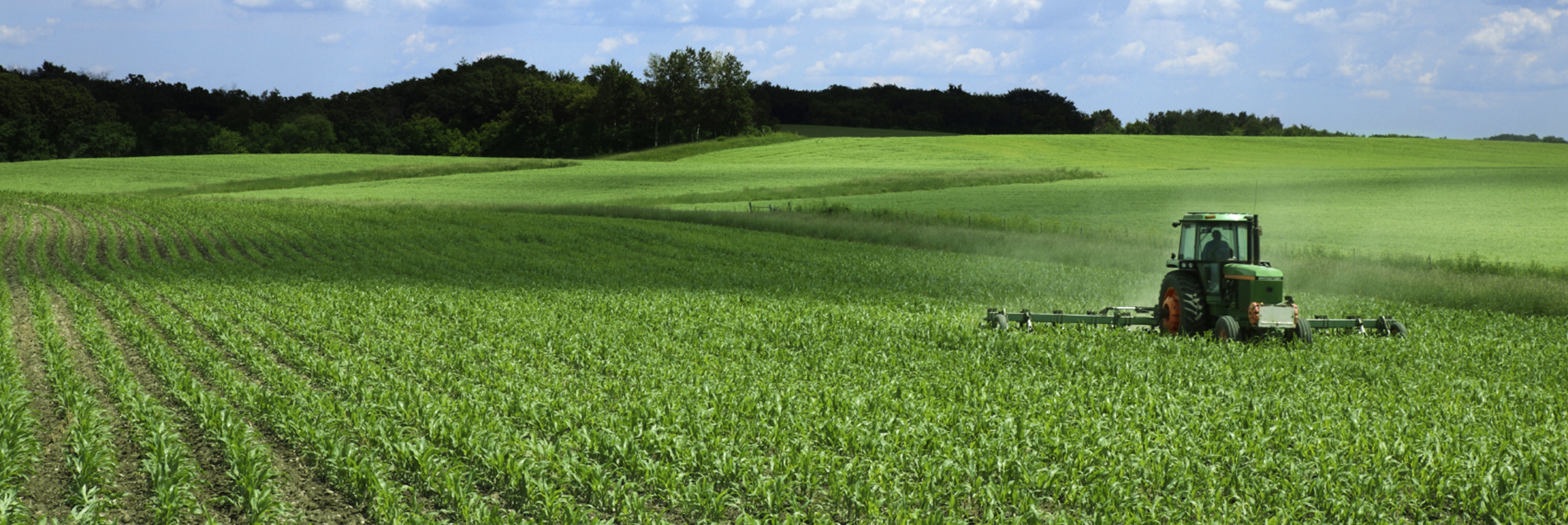
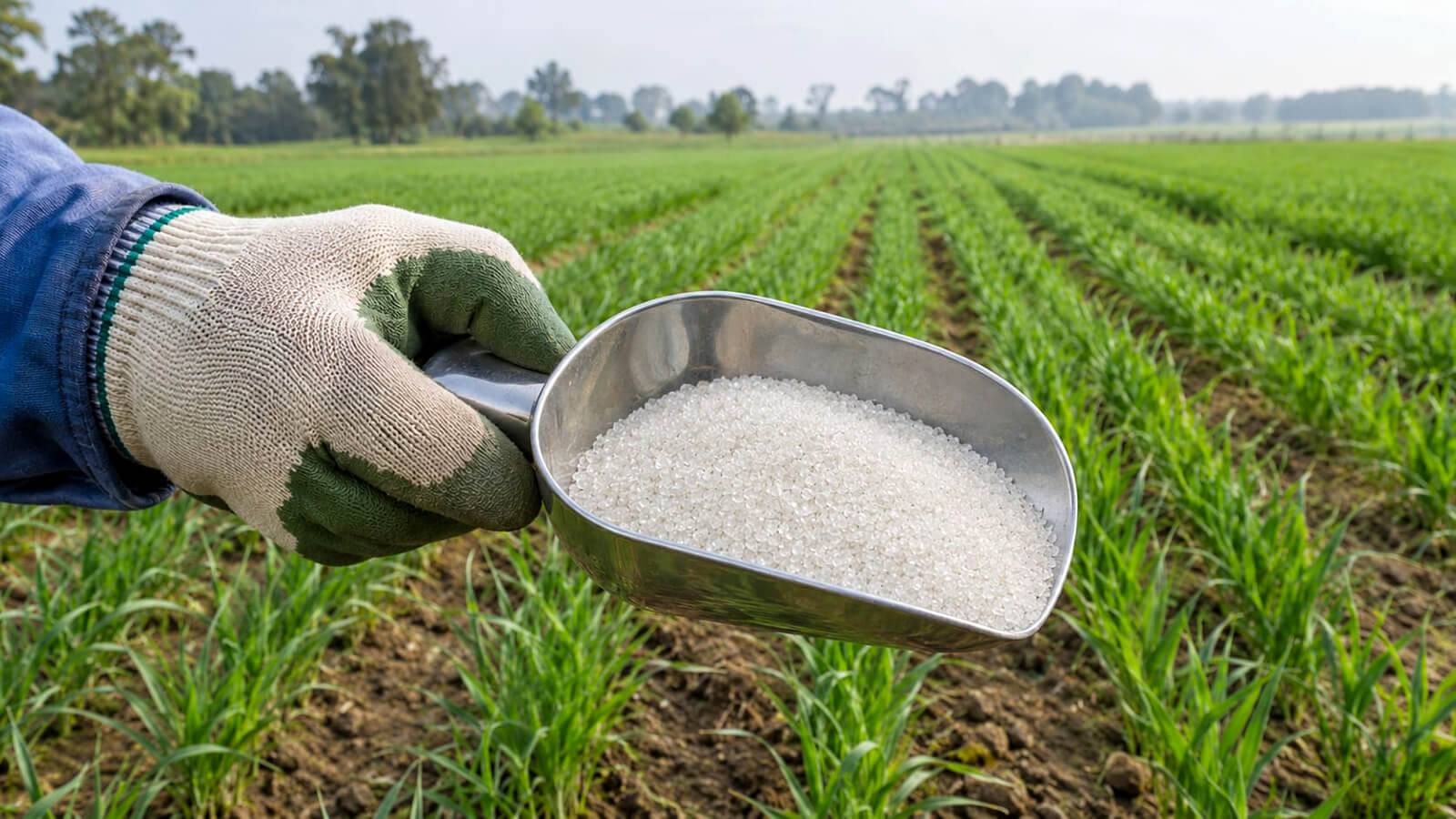
Ammonium sulfate is a mineral fertilizer that supplies nitrogen and sulfur. It helps meet a crop’s nutrient needs and is especially useful in fertilization programs that need to address a sulfur requirement as well as nitrogen demand.
Ammonium sulfate provides nitrogen in the ammonium form and sulfur in the sulfate form. It is used across a range of production systems, from cereals and vegetables to oilseed crops and orchards. The appropriate application method, however, depends on the crop and the conditions in each field.
When choosing a fertilizer, look at soil pH, calcium carbonate content, organic matter, salinity, the crop being grown, irrigation availability and application timing. A product’s name matters less than how it is used. Fertilizer efficiency depends on applying the right source at the right rate, at the right time and in the right place.
What Is Ammonium Sulfate Fertilizer?
Ammonium sulfate is a nitrogen fertilizer that also supplies sulfur. Plants receive its nitrogen in the ammonium form and its sulfur in the sulfate form.
Growers use ammonium sulfate to supply nitrogen and to address sulfur needs where they exist. Its sulfur content is therefore just as important as its total nitrogen content when deciding how it fits into a fertilization program.
Ammonium sulfate does not supply everything a crop needs. Phosphorus, potassium, organic matter and micronutrient requirements must be addressed separately. Depending on soil conditions and the crop being grown, the nutrition program may need several nutrient sources.
Physical Appearance and Agricultural Uses
Ammonium sulfate is commonly sold as light-colored crystals or granules. Appearance alone is not enough to identify a fertilizer or decide whether it is suitable for a particular field.
Its agricultural uses are not limited to a single crop. Ammonium sulfate can be used in sugar beet production, but also in cereals, rice, vegetables, oilseed crops and orchards where the crop’s nutrient needs justify its use.
Check the fertilizer type and guaranteed nutrient analysis on the packaging before buying. The label is a more reliable guide to what the product contains than its appearance or a common name.
Ammonium Sulfate: Chemical Name and Formula
Ammonium sulfate has the chemical formula (NH₄)₂SO₄. It is a mineral fertilizer that can be applied directly in agriculture or used in suitable fertilizer blends.
Product information may also use the abbreviation “AS 21.” Always check the label for the exact nutrient composition, granule characteristics and recommended uses. An abbreviation alone does not provide all the information needed to select and use the product.
What distinguishes ammonium sulfate is its ability to supply sulfur alongside nitrogen. This makes it relevant not only to growers comparing nitrogen sources, but also to those who need to include sulfur in their crop nutrition program.
What Does Ammonium Sulfate Fertilizer Contain?
Standard ammonium sulfate fertilizers generally contain 21% ammonium nitrogen and 24% sulfur. A single application thus supplies two major nutrients, each of which needs to be included in the overall nutrient plan.
Nitrogen plays a role in vegetative growth, protein formation and overall plant development. Sulfur is important for protein synthesis, enzyme activity and the formation of certain essential compounds within the plant.
Nutrient percentages are only part of the picture. Before adding ammonium sulfate to a fertilization program, check the nutrients already available in the soil, the crop’s growth stage and the contributions from other fertilizers.
For purchasing decisions, refer to the product label, registration document and advice from an authorized technical specialist. Products in the same fertilizer group can still differ in their physical characteristics, depending on the manufacturer and form supplied.
What Are the Properties of Ammonium Sulfate Fertilizer?
Ammonium sulfate differs from other nitrogen fertilizers in both its nutrient content and its effects on soil. Its combination of ammonium nitrogen and sulfur can make it a suitable choice under particular growing conditions.
As its nitrogen changes form in the soil, ammonium sulfate can have an acidifying effect. This matters when selecting fertilizers for high-pH and calcareous soils. The response will still depend on the soil, so the same result cannot be expected in every field.
A fertilizer’s chemistry is only one part of the decision. Soil structure and chemistry also affect how well it works, and the same product can give different results across soils and climates.
Ammonium Sulfate as a Source of Nitrogen and Sulfur
Ammonium sulfate supplies nitrogen in the ammonium form. During crop growth, nitrogen helps support the development of leaves, stems and shoots.
Sulfur and nitrogen need to be managed together. Even a crop that receives enough nitrogen can develop a nutrient imbalance if sulfur is in short supply.
Ammonium sulfate can be a useful choice when a fertilization program needs to supply both nutrients. Its sulfur content is especially relevant where testing or a technical field assessment has identified a sulfur requirement.
Supplying nitrogen and sulfur does not remove the need for other nutrients. Phosphorus, potassium, calcium, magnesium and micronutrient requirements still need to be assessed separately.
How Ammonium Sulfate Affects Soil pH
Ammonium sulfate is an acidifying fertilizer. As its ammonium nitrogen is transformed in the soil over time, it can contribute to soil acidification.
This acidifying effect is one reason ammonium sulfate is considered for calcareous and high-pH soils. High pH can restrict the uptake of some nutrients, making careful nutrient planning particularly important in these fields.
Do not expect ammonium sulfate alone to change soil pH quickly. Calcium carbonate content, soil texture, organic matter, rainfall, irrigation water and long-term management all influence how soil pH responds.
In soils that are already acidic, ammonium sulfate should not be used without first assessing whether it is appropriate. Soil testing and advice on fertilizer selection are particularly important in these conditions.
The Physical Form and Solubility of Ammonium Sulfate
Ammonium sulfate fertilizer is most commonly available in crystalline or granular form.
Uniform granules help spreaders distribute fertilizer evenly. Even a uniform product can be applied unevenly, however, if the equipment is not set correctly.
Spreading the product is only the first step. Soil moisture, irrigation availability and rainfall after application help determine whether nutrients reach the root zone where the crop can use them.
Store the product in a dry, enclosed area and protect it from moisture. Damp fertilizer can cake, making it harder to apply and less likely to spread uniformly.
What Is Ammonium Sulfate Used For?
Ammonium sulfate helps meet a crop’s nitrogen and sulfur needs. Nitrogen supports growth and the development of leaves, stems and shoots. Sulfur contributes to protein formation and other processes in plant metabolism.
These benefits do not mean that ammonium sulfate alone guarantees a higher yield. Crop response also depends on soil characteristics, climate, irrigation, disease pressure, the supply of other nutrients and application timing.
Use the right nutrient source at the right rate, at the right time and in the right place. These principles help crops make better use of fertilizer and help growers avoid unnecessary costs.
Helps Meet the Crop’s Nitrogen Requirements
Nitrogen is among the nutrients plants need in the largest quantities. The development of leaves, stems and shoots, as well as overall vegetative growth and crop performance, depends heavily on an adequate nitrogen supply.
The nitrogen in ammonium sulfate is in the ammonium form. What happens to it in the soil depends on temperature, moisture, microbial activity and pH.
A nitrogen shortage in the crop does not always mean too little fertilizer was applied. Poor root growth, excessive irrigation, compacted soil, low organic matter or disease can also prevent plants from taking up enough nutrients.
If plants are yellowing or growing poorly, identify the cause before deciding whether more nitrogen is needed.
Helps Meet the Crop’s Sulfur Requirements
Unlike urea, ammonium sulfate supplies sulfur as well as nitrogen. Plants use sulfur in protein synthesis, enzyme activity and a range of other metabolic processes.
A nitrogen-only fertilizer may not be enough where sulfur is also needed. Ammonium sulfate offers one way to address both requirements within the same nutrient program.
Soil characteristics, organic matter, rainfall, previous crops and earlier fertilizer applications all affect sulfur availability. Use test results where possible to assess a suspected deficiency rather than relying on visible symptoms alone.
Sulfur needs vary from field to field. Even neighboring fields in the same area can have different sulfur and organic matter levels.
Plant Growth and Leaf Color
An adequate, balanced nitrogen supply supports healthy leaf development. Nitrogen deficiency may cause yellowing, particularly in older leaves, along with weak growth.
Not every change in leaf color should be attributed to nitrogen deficiency. Root diseases, water stress, iron deficiency, magnesium deficiency and high soil salinity can produce similar symptoms.
Look at the whole field when investigating crop problems. Note which leaves showed symptoms first, and review irrigation practices and soil conditions. If the cause remains unclear, leaf analysis and advice from a specialist can help guide the next step.
Too much nitrogen can cause problems of its own. In fruiting crops, excessive vegetative growth can affect flowering and upset the balance between leaf and shoot growth and fruit production.
Soil Nutrient Availability
Soil pH, moisture, temperature, root development, organic matter and microbial activity all influence nutrient availability. These same conditions affect how ammonium sulfate performs, so its effects cannot be assessed in isolation.
As ammonium nitrogen changes form in the soil, it can alter conditions around the roots. This is relevant when planning crop nutrition, particularly in high-pH soils.
Ammonium sulfate cannot correct every nutrient problem. If soil lacks phosphorus, potassium, zinc, iron or organic matter, using ammonium sulfate alone will leave those needs unmet and will not provide balanced nutrition.
Soil testing is one of the most reliable tools for identifying which nutrients are needed and in what quantities.
Which Soils Can Ammonium Sulfate Be Used In?
Ammonium sulfate can be used where both nitrogen and sulfur are needed. Its acidifying effect also makes it worth considering for calcareous and high-pH soils, provided it fits the field’s nutrient requirements and overall fertilization program.
Every field has different requirements. Two fields in the same district can differ considerably in pH, calcium carbonate content, salinity and organic matter levels.
Whether ammonium sulfate suits a particular soil depends on that soil’s characteristics and nutrient needs. Soil test results provide the most reliable starting point for making that decision.
Use in Calcareous and High-pH Soils
In calcareous and high-pH soils, plants can struggle to take up certain nutrients. Phosphorus, iron, zinc and manganese availability can be particularly affected.
Ammonium sulfate’s acidifying effect is one reason growers consider it for these soils. The appropriate use still depends on the field, and not every high-pH soil calls for the same application.
In soils with very high calcium carbonate levels, changing the nitrogen source alone may not be enough. The wider nutrient plan may also need organic matter applications, micronutrient management, suitable irrigation and products selected for the field’s specific needs.
Do not apply large amounts of ammonium sulfate simply to lower soil pH. Soil improvement and long-term pH management need a plan based on test results, not an indiscriminate increase in fertilizer use.
Soils with Sulfur Deficiency
Pay particular attention to sulfur deficiency in soils low in organic matter, in light-textured soils and in areas with high rainfall. Rainwater can carry sulfate sulfur through the soil profile.
Sulfur deficiency can sometimes resemble nitrogen deficiency. A decision based only on how the crop looks can lead to the wrong fertilizer application.
Soil tests and, where needed, leaf analysis help identify the crop’s actual nutrient requirements. That information makes it easier to decide whether ammonium sulfate is a suitable choice.
Once a sulfur requirement is confirmed, plan the ammonium sulfate rate alongside any other nitrogen fertilizers. Its nitrogen contribution must be included in the total nitrogen budget.
Why Is Soil Testing Important?
Soil testing provides information on pH, calcium carbonate content, salinity, organic matter, phosphorus, potassium and certain micronutrients. These results supply much of the information needed to build a fertilization program.
The results can help identify both the fertilizer required and the areas that need attention first. Different parts of the same field may call for different approaches to nutrient management.
Use the product label, crop growth stage and soil test results to determine when and how much ammonium sulfate to apply. A fixed rate found online is not a recommendation that can safely be assumed to suit every grower.
An agronomist can interpret soil test results in light of field conditions. This is particularly valuable when an application involves a substantial cost or a large area.
Which Crops Can Ammonium Sulfate Be Used On?
Ammonium sulfate can be used in cereals, vegetables, oilseed crops, rice, orchards and other field crops when their nutrient needs call for it. The crop species alone does not establish whether the fertilizer is suitable.
Growth stage, soil characteristics, irrigation method and target yield all shape the fertilization program. Even the same crop may have different nitrogen and sulfur requirements from one region to another.
Do not apply a fertilizer simply because the crop appears on a list of suitable uses. First establish what nutrients are needed in the field where that crop is growing.
Using Ammonium Sulfate in Cereals
For wheat, plan ammonium sulfate applications around soil pH, sulfur requirements, the previous crop, rainfall and the overall nitrogen program. Nitrogen management is especially important during stages such as tillering and stem elongation.
Before selecting a nitrogen source for wheat, check the nutrients already available in the soil and calculate the crop’s total nitrogen requirement. Where sulfur is needed, the sulfur supplied by ammonium sulfate can be an additional advantage.
Too much nitrogen, or an application at the wrong stage, can cause lodging and unbalanced growth in cereals. Plan each application around the field’s needs rather than treating nitrogen use as a routine task.
In rainfed production, check the weather forecast before applying fertilizer. Enough moisture after application helps make the nutrients available in the soil.
Using Ammonium Sulfate in Orchards
Plan orchard fertilization around tree age, canopy size, crop load, the irrigation system and leaf analysis results. Trees do not necessarily need equal amounts of fertilizer, even within the same orchard.
Aim fertilizer applications at the active root zone. Account for how far the roots extend rather than depositing the product directly at the base of the trunk.
Timing is particularly important when applying nitrogen to fruit trees. An excessive rate or an application at the wrong stage can encourage vegetative growth at the expense of fruit quality and the balance between growth and fruiting.
Use soil test and leaf analysis results to guide the orchard nutrient program, and coordinate fertilizer applications with irrigation management.
Using Ammonium Sulfate in Vegetable Production
Vegetable crops have different nutrient requirements, and those needs change as they develop. Leaf growth, flowering, fruit set and harvest can each call for a different nutrient balance.
Before using ammonium sulfate on tomatoes, assess how much nitrogen the crop already has. Too much can encourage excessive leaf and shoot growth and upset the balance between foliage and fruit production.
Irrigation also shapes fertilizer planning in vegetable production. Drip, open-channel and sprinkler systems differ in how they move nutrients through the soil, which can affect application timing.
A greenhouse crop may need a different fertilization program from the same crop grown in an open field. Base the plan on the conditions in the growing area rather than copying another grower’s applications.
Oilseed Crops and Sulfur Requirements
Sulfur is an important part of nutrient planning for oilseed crops. Assess the amount needed using soil test results, the crop variety, rainfall conditions and the intended yield.
Because ammonium sulfate supplies both nitrogen and sulfur, it can be a suitable choice under the right conditions. Its sulfur content is particularly useful where a deficiency or a clear sulfur requirement has been identified.
Nitrogen alone may not give oilseed crops the nutrient balance they need. The program must also account for phosphorus, potassium, boron and any other required nutrients.
When developing a crop nutrition plan, consider which nutrients the crop needs most at each stage of development.
When Should Ammonium Sulfate Be Applied?
The right application time depends on the crop, soil conditions, weather, expected rainfall and access to irrigation. The same fertilizer may need to be applied at different times in different regions.
The aim is to have nutrients in the root zone when the crop needs them. Good timing helps match the fertilizer supply to crop demand and is a central part of nutrient management.
Depending on crop needs, the program may include applications before sowing, at sowing or as a top-dressing later in the growing season.
Application Before Sowing or Planting
Applying fertilizer before sowing or planting can help it mix more evenly into the soil. Avoid placing concentrated fertilizer in direct contact with seeds or seedling roots.
Fertilizer placed too close to the seed can harm germination and early growth. Check seed drill settings, application depth and the distance between the seed and fertilizer.
Before a pre-planting application, check soil moisture and whether the ground is suitable to work. Very dry, very wet or compacted conditions can prevent the application from working as intended.
Use the product label as the main reference for choosing the application method.
Top-Dressing During Crop Growth
Top-dressing supplies nutrients while the crop is growing. Applying at the right stage helps the crop use nitrogen efficiently.
Too much fertilizer applied before the crop needs it can be lost or add unnecessary cost. Applied after the main period of need, it may no longer provide the expected benefit.
Adequate moisture after application helps nutrients reach the root zone. If heavy rain is forecast, assess the risks of runoff and nutrient loss before going ahead.
Before top-dressing, check crop development, leaf color, soil moisture and the rainfall forecast. Use any available test results to help decide whether the crop needs the application.
What to Consider for Spring and Autumn Applications
Spring and autumn differ in soil temperature, rainfall, evaporation and the speed of crop development. Applying fertilizer on a fixed calendar date does not account for these differences and may not give the intended result.
In spring, watch for rapid crop growth and changing rainfall conditions. In autumn, use the sowing date, soil moisture and rainfall pattern to guide application decisions.
Reassess any application planned before heavy rain, on very dry ground or when frost is a risk. Fertilizer timing needs to respond to the weather, not follow a schedule regardless of conditions.
Keeping records of soil conditions and crop development each growing season helps growers make better-informed decisions over time.
How Is Ammonium Sulfate Applied?
Ammonium sulfate is primarily applied to the soil. How it is applied depends on the equipment available, plant density, the sowing system and the stage of the season.
Broadcasting and band placement are two common methods. Choose between them according to the crop, field size, available equipment and the application instructions on the product label.
Whichever method is used, even distribution across the field is essential. Uneven application can leave some parts of the crop growing differently from others within the same field.
Broadcasting Ammonium Sulfate
Broadcasting spreads fertilizer evenly across the soil surface. Calibrating the equipment helps ensure that the intended rate is delivered uniformly.
Incorrect equipment settings can deliver too much fertilizer to some areas and too little to others. This increases costs and can cause uneven crop growth.
Where conditions allow, irrigation or light cultivation after broadcasting can help move fertilizer into the root zone. Choose a method that is appropriate for the crop’s growth stage and will not damage the plants.
Fertilizer that remains on the surface for a long time may be used less efficiently, especially in unfavorable weather. Check the forecast and irrigation plan before application to help avoid this.
What Is Band Placement?
Band placement puts fertilizer in a defined line close to the crop’s root zone. This allows nutrients to be placed more precisely in the area where they are needed.
Keep the fertilizer separate from seeds and roots. Placing it too close can cause stress in the root zone, especially in young plants.
The right depth and distance depend on the crop, sowing method, soil characteristics and equipment. A single placement distance or standard application method will not suit every situation.
Check the seed drill or fertilizer applicator settings before use. Correct settings help avoid wasted fertilizer and support even crop development.
The Role of Irrigation and Rainfall
Moisture allows fertilizer to dissolve in the soil solution and move toward the roots. Rainfall and irrigation must therefore be part of the nutrient plan, not treated as separate considerations.
Enough moisture after application helps roots take up the supplied nutrients. Excess water can increase nutrient losses, particularly in light-textured soils or on sloping land.
Heavy rain after application can carry fertilizer away in surface runoff. Dry conditions create a different problem by delaying its dissolution in the soil.
Coordinate irrigation with fertilizer application dates. Planning both operations together helps use water and fertilizer more efficiently.
Why Does the Application Rate Vary Between Fields?
Fields differ in pH, organic matter, cropping history, access to irrigation and target yield. No single ammonium sulfate rate can account for all these differences or suit every grower.
Even the same crop can need a different nutrient program in different soils. A soil rich in calcium carbonate, for example, may require a different approach from a light-textured soil low in organic matter.
Set the application rate using soil test results, the crop’s growth stage, label instructions and an agronomist’s recommendations. This helps avoid both unnecessary fertilizer use and a shortfall in the nutrients supplied.
Treat general rates found online as background information, not as ready-made application instructions for your field.
What Is the Difference Between Ammonium Sulfate and Urea?
Ammonium sulfate and urea differ in nutrient composition, nitrogen form and sulfur content. Urea has a high nitrogen concentration, while ammonium sulfate supplies sulfur as well as nitrogen.
Before asking which fertilizer is better, ask what your soil and crop need. The right choice depends on how well a product meets the field’s requirements, rather than on its composition alone.
Urea and ammonium sulfate are not interchangeable at the same rate, at the same time or for every purpose. Account for the nitrogen each supplies and plan for sulfur needs as part of the same program.
Comparing Nutrient Composition
Ammonium sulfate generally contains 21% nitrogen and 24% sulfur. Urea, with approximately 46% nitrogen, is a more concentrated nitrogen source.
The price per bag does not provide a fair comparison on its own. The same weight of each fertilizer supplies a different amount of nitrogen.
Sulfur content can be a decisive difference where a field needs sulfur. Urea contains none, so a separate source may need to be included if urea is used to meet the nitrogen requirement.
Compare label information and the field’s actual requirements alongside the full cost of application, including labor and transport.
How Do Sulfur Requirements Affect Your Decision?
If tests identify a sulfur requirement, a nitrogen-only fertilizer may leave that need unmet. Ammonium sulfate is one option for supplying both nutrients in those fields.
Another fertilizer may be more appropriate where sulfur is not needed or is already being supplied. Build the program around the full nutrient requirement rather than committing to one product.
Some crops need particularly careful sulfur management. The crop species is only part of that assessment, alongside soil test results and the conditions under which it is grown.
Use test results and label information, supported by technical advice, to choose the product that fits those conditions.
Which Fertilizer Suits Which Conditions?
Urea may be suitable where a high nitrogen requirement is the main priority. Ammonium sulfate may be a better fit where sulfur is also needed, including in calcareous or high-pH soils.
When the fertilizer will be applied matters too. Check air temperature, irrigation availability, the rainfall forecast and the intended application method before deciding.
Price, habit and neighboring growers’ choices are not enough to select a fertilizer. A product that works in one field may give a different result in another.
Match the nutrient source to the field, then apply it at the right rate, at the right time and in the right place.
What Is the Difference Between Ammonium Sulfate and Ammonium Nitrate?
Ammonium sulfate and ammonium nitrate differ in the forms of nitrogen they supply. Those differences can affect how they behave in soil, when they are applied and how they fit into a nutrient program.
Ammonium sulfate supplies sulfur alongside nitrogen. Ammonium nitrate-based products may contain both ammonium and nitrate nitrogen, depending on their formulation.
For either product, follow the current label, applicable regulations and technical guidance. The nitrogen percentage alone does not establish whether a fertilizer is the right choice.
The Role of Nitrogen Forms in Crop Nutrition
Nitrogen occurs in several forms in soil, each with its own behavior. Ammonium nitrogen changes form over time through processes in the soil.
Nitrate behaves differently from ammonium in terms of movement through the soil. Irrigation, rainfall, soil texture and application timing all matter when deciding which nitrogen source to use.
The most suitable nitrogen form depends on the field’s conditions and the crop’s needs. No single source is the best choice in every situation.
Plan the total nitrogen supply and application schedule with potential nutrient losses in mind.
Application Timing and Soil Conditions
Applying nitrogen at the right stage helps meet crop demand and reduce losses. When an application is too early or too late, the crop may use the supplied nutrients less efficiently.
Take particular care when the soil is very dry or very wet, or when heavy rain is expected. Include the weather forecast and irrigation schedule in the application decision.
Before choosing between ammonium nitrate and ammonium sulfate, read each product’s label and seek advice on its use. Application requirements may differ between products and regions.
Wherever possible, use test results as the starting point for the fertilization program.
Is Nitrogen Content Alone Enough to Choose a Fertilizer?
No. The decision also depends on sulfur content, soil pH, salinity, organic matter, irrigation availability and crop growth stage. Nitrogen percentage is important, but it does not tell the whole story.
A high-nitrogen product is not necessarily the right one for the field. A sulfur deficiency or different application conditions may make another nutrient source more suitable.
Cost matters, but the cheapest bag is not necessarily the least expensive way to meet crop needs. Compare the nutrients supplied, the amount required, labor costs and how efficiently the crop is expected to use the application.
A balanced nutrient program accounts for other essential nutrients and micronutrients as well as nitrogen.
Can Ammonium Sulfate Be Used Alongside Organic Fertilizers?
With careful planning, ammonium sulfate and organic fertilizers can form part of the same nutrient program. They serve different roles, however, and should not be treated as equivalent contributions to the soil.
Organic fertilizers can supply organic matter and humic and fulvic components while supporting the soil’s physical condition and biological activity. Mineral fertilizers offer a more targeted way to supply particular nutrients.
The aim is not simply to substitute one fertilizer for another. It is to combine their roles in a way that matches the needs of the soil and crop.
Balancing Organic Matter and Mineral Nutrients
Organic matter is important for soil water-holding capacity, aeration, root development and biological activity. Ammonium sulfate is not a source of organic matter.
Where soil organic matter is low, mineral fertilizers alone may not be enough for effective long-term soil management. The nutrient program also needs to assess the role of organic sources.
Mineral fertilizers address specific nutrient needs. Organic sources have a different role in supporting the soil’s overall condition.
Planning how both types will be used can help build a more balanced system suited to the field’s needs.
Balanced Nutrition Based on Soil Testing
Balanced crop nutrition means more than supplying nitrogen. Depending on soil needs, the plan must also account for phosphorus, potassium, sulfur, calcium, magnesium and micronutrients, as well as organic matter.
Soil tests help show which nutrient needs to address first. This can reduce unnecessary applications and help growers spend their fertilizer budget more effectively.
At ARF Bio, we offer organic, organomineral and conventional fertilizers for a range of nutrient needs. Choose products using their label information, soil test results and technical advice on what suits your field.
A balanced program meets the crop’s immediate nutrient needs without losing sight of the soil’s long-term fertility.
Working with an Agronomist on Your Fertilizer Program
An agronomist can help turn test results into a practical fertilizer program, particularly for large-scale production. Interpreting the results correctly can prevent unnecessary spending on applications the field does not need.
Problems such as high pH, salinity, low organic matter, sulfur deficiency or declining yields need a broader assessment, rather than a focus on one fertilizer. Review the overall soil and production conditions when investigating these problems.
Advice from a specialist helps growers choose the right product and application stage. Following crop development throughout the season also makes it possible to adjust the program when conditions change.
Regular soil and leaf testing helps growers build a clearer picture of their fields over time.
How to Compare Ammonium Sulfate Prices
Ammonium sulfate prices vary with composition, package size, order quantity, manufacturer, dealer, transport distance and seasonal market conditions. Comparing bag prices without checking these details can lead to a poor purchasing decision.
Check the guaranteed nutrient analysis and net weight, along with registration details, label information and delivery terms. These establish what is being offered and make price comparisons more meaningful.
Calculate the cost of using the fertilizer, not just buying it. Include the application rate per decare, the cost of applying it and the nutrients supplied. One decare is 1,000 m².
What Affects the Price of Ammonium Sulfate?
Raw material costs, exchange rates, seasonal demand, packaging, logistics and dealer terms can all affect ammonium sulfate prices. The same product may cost more or less at different times or in different regions.
Compare the net weight and composition of the products on offer. Equal weights do not necessarily mean identical nutrient content or physical characteristics.
Ask the manufacturer or dealer to include the product label with the quotation. Having both makes it easier to see what you are paying for.
Choose a product that meets the field’s needs rather than automatically selecting the lowest-priced option.
Comparing Prices for 50 kg Bags of Ammonium Sulfate
When requesting a price for a 50 kg bag, check the net weight and the stated 21% nitrogen and 24% sulfur content. Also confirm the packaging type, delivery arrangements and transport terms so that the quotations can be compared fairly.
Prices can differ between regions. A single price found online is not necessarily representative of the wider market.
For an up-to-date comparison, request written quotations from an authorized dealer or the manufacturer.
Common Mistakes When Using Ammonium Sulfate
Application mistakes can make ammonium sulfate less effective and increase costs. A common starting point for these problems is applying it before finding out what the soil actually needs.
Use the right source at the right rate, at the right time and in the right place. Following these principles matters for both production costs and the environment.
Applying Fertilizer Without Testing
Without a soil test, it is easy to supply a nutrient the field already has while overlooking one that is lacking.
Applying fertilizer without knowing the soil’s pH, calcium carbonate content, salinity and organic matter level can make the program less effective. The same product can perform differently in different soils.
Testing is not a reason to avoid fertilizer. It is a way to decide which fertilizer is needed and where it will be useful.
Applying at the Wrong Time or Rate
Nitrogen applied when the crop does not need it may fail to provide the intended benefit. An excessive rate can cause unbalanced growth, add unnecessary cost and increase the risk of nutrient loss.
Match the rate to the crop, its growth stage, soil test results and label instructions. No fixed application rate suits every field.
The weather can also change the right time to apply. Review the plan when heavy rain, drought or frost poses a risk.
Trying to Meet All Nutrient Needs with One Fertilizer
Ammonium sulfate supplies nitrogen and sulfur, but it cannot meet requirements for phosphorus, potassium, organic matter or micronutrients on its own.
Relying on one fertilizer for every nutrient need can create imbalances over time. If other soil deficiencies remain unaddressed, they may limit crop growth.
Build a balanced program around soil test results, crop development and the production outcome you are aiming for.
Neglecting Storage and Application Safety
Store fertilizers in a dry, enclosed area under suitable conditions. Moisture can cause caking, interfere with flow through the equipment and make application more difficult.
Follow the use and safety instructions on the packaging. Wear the required personal protective equipment during application and keep the product away from children, animals and food.
Close opened packages properly and keep them away from direct contact with water and moisture. Good storage helps preserve the physical condition of the fertilizer.
Frequently Asked Questions About Ammonium Sulfate
Can Ammonium Sulfate Be Used on Every Crop?
Ammonium sulfate can be used on many crops, but it is not suitable for every crop or field. Check crop nutrient needs, soil pH, sulfur status and what the existing fertilizer program already supplies.
Crop species alone does not determine the choice. The same crop can need a different nutrient program when soil or irrigation conditions change.
Does Ammonium Sulfate Acidify Soil?
Yes. Ammonium sulfate is an acidifying nitrogen fertilizer. As its ammonium nitrogen undergoes nitrification in the soil, hydrogen ions are released. Over time, this can contribute to a lower soil pH.
It may be a suitable nitrogen and sulfur source for high-pH and calcareous soils. In low-pH soils, do not apply it without soil test results and an identified need, because its acidifying effect could be undesirable.
Is Ammonium Sulfate or Urea Better?
Neither fertilizer is better in every situation. Urea has a high nitrogen content, whereas ammonium sulfate supplies sulfur as well as nitrogen.
Choose according to soil test results, the crop’s requirements, sulfur levels, application timing and irrigation conditions.
Should Ammonium Sulfate Be Applied Before Irrigation?
Moisture after application helps the fertilizer move into the soil. Plan when and how much to irrigate according to soil characteristics, the weather and the crop’s needs.
Overirrigation or application before heavy rain can increase the risk of nutrient loss and surface runoff.
Can Ammonium Sulfate Be Used as a Foliar Fertilizer?
Granular ammonium sulfate is primarily intended for soil application. It should not be applied to leaves unless the product label explicitly permits foliar use.
If foliar feeding is needed, select a product developed for that purpose whose label specifically permits foliar application.
At What Stage Should Ammonium Sulfate Be Used?
Ammonium sulfate may be used before sowing or planting, or during crop growth, depending on the crop and its nutrient needs. Soil test results and irrigation conditions help determine which timing is appropriate.
Set the timing within a program tailored to the field. The crop’s actual need matters more than a general calendar recommendation.
Conclusion
Ammonium sulfate is a mineral fertilizer containing nitrogen and sulfur.
Ammonium sulfate is an important option where a fertilizer program needs to supply both nutrients. To use it appropriately, match label instructions to soil test results, crop growth stage and irrigation conditions, with technical advice to guide the decision.
Successful fertilization does not depend on one product alone. A well-planned program addresses the crop’s actual nutrient needs while protecting long-term soil fertility and maintaining balanced nutrition.